

Third-party testing vs in-house
In-house testing on real instruments is real testing. What it lacks is a way for someone who was not in the room to check the result.
The difference is independence, not competence
A supplier running their own high performance liquid chromatography is doing genuine analysis. The equipment is the same equipment, the method is the same method, and a well-run in-house laboratory produces results as accurate as anyone else's.
The gap is structural. The party reporting the number is the party whose revenue depends on the number, and there is no external record of the analysis. None of that proves a result wrong. It means your confidence rests entirely on the supplier's reputation, which is reasonable in some cases and no basis at all in others.
Third-party testing replaces that with something checkable. A named laboratory, a report number, and an organization with no stake in the outcome that can be contacted to confirm the report exists.
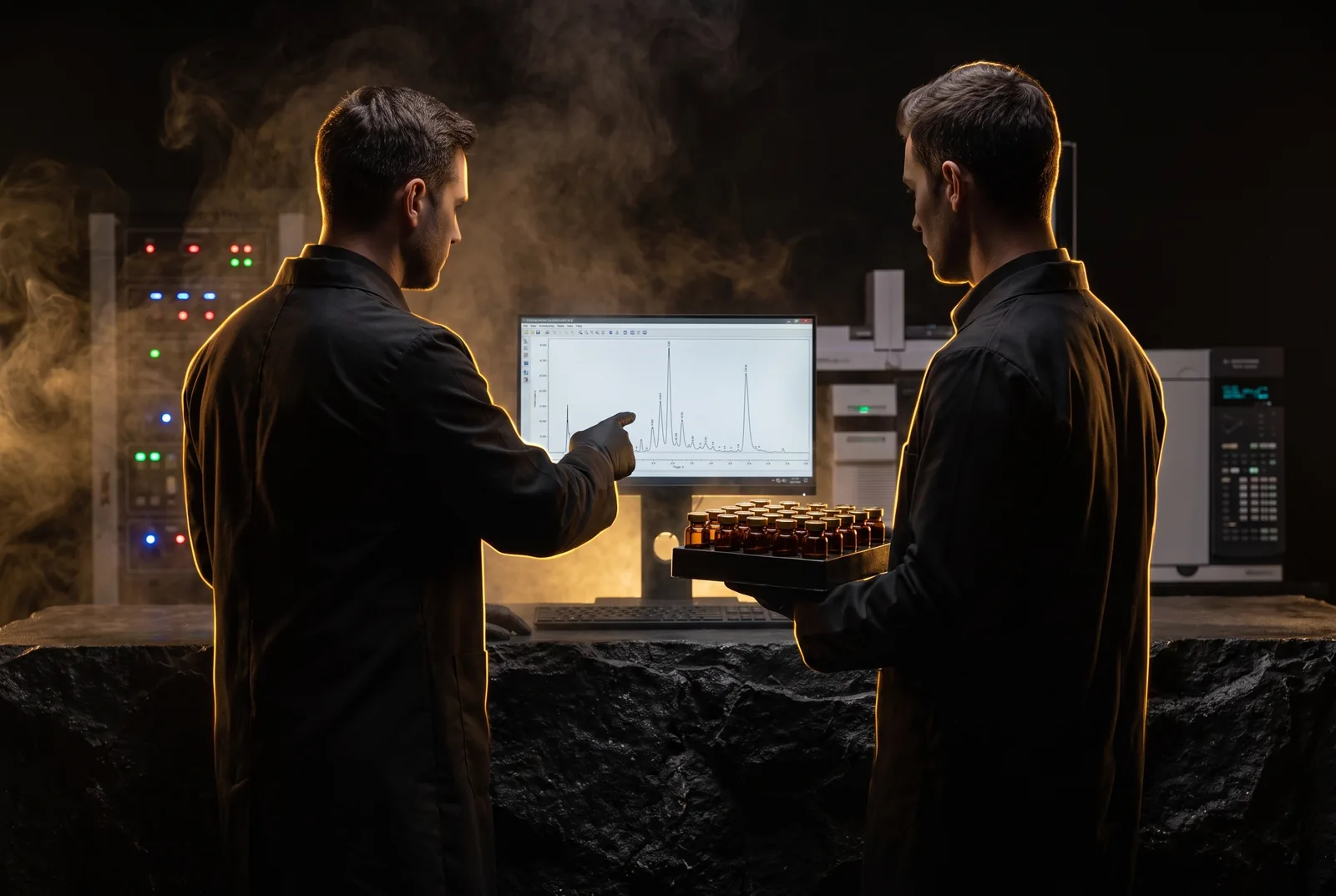
What each arrangement gives you
In-house
Fast, cheap per lot, and therefore practical to run on every lot rather than on samples. A supplier with instruments in the building can test more often than one sending material out. Unverifiable from outside.
Third-party
Independent and checkable, with an accreditation and a reputation of its own behind the result. Slower and more expensive per lot, which in practice means it gets run less often unless the supplier has committed to per-lot testing.
In-house plus third-party audit
Every lot in-house, a sample of lots sent out independently. Common in manufacturing, gives most of the coverage of the first and most of the verifiability of the second, and is worth asking about specifically.
Neither, with a document anyway
A certificate with no laboratory named anywhere on it. This is the case the other three need to be told apart from, and it is more common in this market than any of them.
Checking a third-party claim
- 01
Find the laboratory name on the document
On the report itself, not on the supplier's website. A page that says independently tested while the attached PDF names no laboratory has made a claim the document does not support.
- 02
Look for a report or work order number
A real laboratory issues numbered reports because it has to find them again. A document with no reference number cannot be looked up by anyone, including the laboratory.
- 03
Check for an accreditation
ISO/IEC 17025 is the relevant standard for testing laboratories, and accredited laboratories are listed publicly by their accrediting body. The scope of the accreditation matters too, since it is granted for specific methods rather than for the laboratory generally.
- 04
Contact the laboratory
Most will confirm whether a report number exists. It is the one step that separates a real third-party report from a convincing letterhead, and almost nobody takes it.
- 05
Compare documents across products
Two different compounds from the same supplier should produce two visibly different chromatograms. Identical traces mean one analysis is being reused.
What per-lot testing costs, and what that tells you
Third-party analysis costs a few hundred dollars a lot and adds days to a release. Across a large production lot that is fractions of a cent per vial. Across a small lot bought in and repackaged, it is a meaningful share of the margin, and it is the first line item to go.
That is the useful frame. Per-lot third-party testing is not a sign of virtue. It is a sign of scale and of a decision about where to spend. A supplier who runs it is telling you something real about how they are set up, and a supplier who does not is not automatically selling bad material. What separates them is whether the documentation says plainly which one is the case.
Questions
Common questions
Does third-party testing guarantee the material?
It verifies the sample the laboratory received. It does not verify that the sample came from the lot on the label, which is why lot numbers matching between vial, certificate and laboratory report is the connection that has to hold.
What does ISO/IEC 17025 accreditation cover?
The competence of a testing laboratory for specific methods within a defined scope. It is granted per method, so a laboratory accredited for one technique is not automatically accredited for another, and the scope is public.
Is a supplier with in-house instruments better or worse?
Different. In-house capacity usually means more lots get tested, because the marginal cost of a run is low. It also means no independent record exists. The strongest arrangement is in-house on every lot with third-party verification on a sample of them.
How can a laboratory report be verified?
The report number and the laboratory's contact details, both of which should be on the document. Most laboratories will confirm a report exists. It takes one email and it is the only check that distinguishes a genuine third-party report from a well-made imitation.
Cite as: SBz Industries research library, "Third-party testing vs in-house", https://www.sbzindustries.com/research/third-party-vs-in-house, updated 2026-09-11.
Documentation
Every compound, its certificate published
We expect the checks on this page to be run on our own paperwork. The latest certificate for every compound is on its product page.