
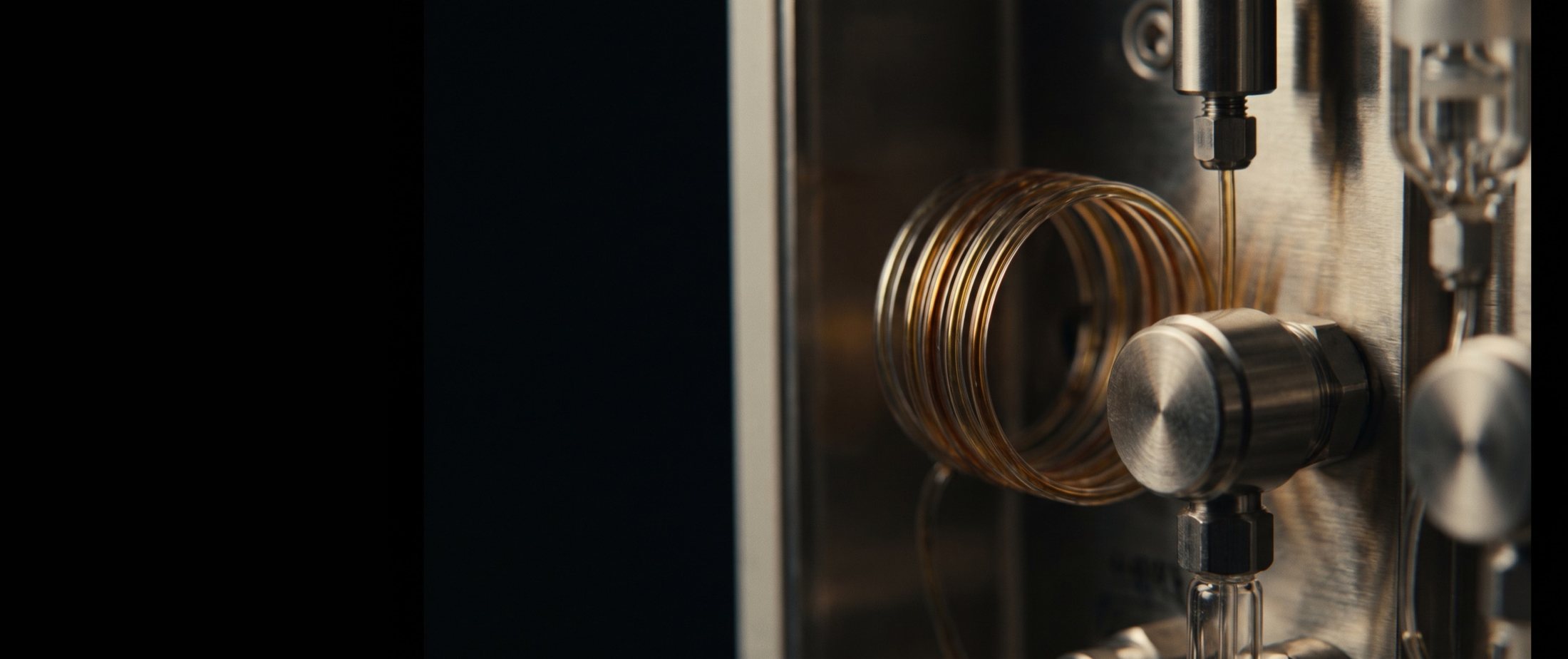
How we test every compound
What a compound has to pass before it goes on sale, who does the testing, and where you can read the result.
The standard
Four things every compound has to pass
- Identity
- The lab confirms it is the right compound by matching its HPLC retention time to a reference standard. The certificate says which method was used.
- Purity
- Measured by HPLC at 214 nm and reported as the share of the sample that is the compound. It has to meet the specification for that compound.
- Lab
- Independent, named on the certificate, with its own report number. Today that is ILS Laboratories in San Diego, accredited to ISO/IEC 17025.
- Publishing
- The certificate is posted on the product page before the compound goes on sale.
Net peptide content, water content and counterion are reported when the lab measured them. They are not required for release, and a certificate without them does not imply them.
Step by step
From delivery to release
New material is tested before it is sold. The lab report goes on the product page for that compound, so you can read it before you order.
The steps on the right happen in that order for every compound. None of them is skipped for a repeat compound or a repeat supplier.
- 01
Received and held
New material waits on the shelf. Nothing is sold while it waits.
- 02
Sample sent
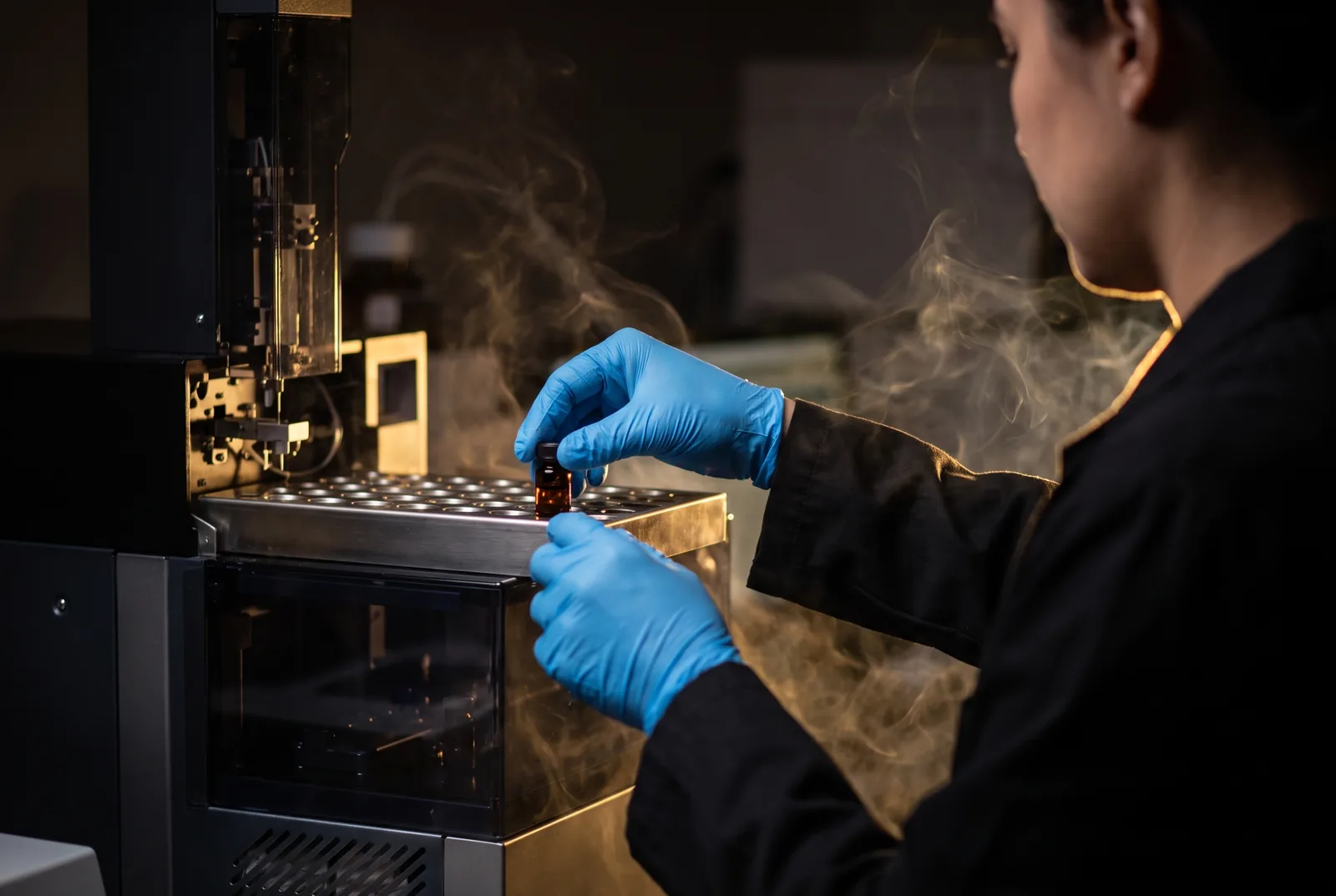
A sample goes to the lab with the compound named on the submission form.
- 03
Tested
The lab confirms the compound and measures purity by HPLC, then issues a numbered report.
- 04
Certificate published
The report goes on the product page and in the certificate archive, where anyone can read it.
- 05
Released
It goes on sale, with the certificate on the product page.
The two tests
What each test can and cannot tell you
HPLC measures purity
How much of the sample is the main compound. On its own it cannot tell you what that compound is.
ReadIdentity says what it is
Whether the compound matches the reference standard, by retention time or by mass. It cannot tell you how much of it there is.
ReadPurity is not the same as content
Purity describes the peptide part of the powder. Net peptide content describes the whole powder. A vial can be 99 percent pure and 78 percent peptide by weight.
ReadNeither one is sterility
Sterility and endotoxin are separate tests that answer separate questions. A purity number says nothing about either.
ReadQuestions
Common questions
Who does the testing?
ILS Laboratories in San Diego, an independent lab accredited to ISO/IEC 17025. It is named on every certificate with its own report number. Nothing that has not been through the lab goes on sale or gets a certificate.
What does a compound have to pass?
Two things. The lab confirms it is the right compound, by matching its HPLC retention time to a reference standard. And purity by HPLC has to meet the specification for that compound. Net peptide content is reported when the lab measured it.
What happens to material that fails?
It does not go on sale and it does not get a certificate. We hold it, tell the supplier, and it never enters stock.
Do you test for sterility or endotoxin?
Not as part of the release standard for freeze-dried research material, and the certificate does not claim it. If a lab report includes either result, it is published as reported. The two are different tests that answer different questions, and the sterility and endotoxin guide explains both.
Check it
Read the certificates
The latest lab certificate for every compound, with the lab and report number on each.
Elsewhere