
What are research peptides?
A plain-English guide
Short chains of amino acids, made in a lab and sold to researchers as chemicals. Here is what that means, how they are made, how they are checked, and what to look for before you buy.
The short answer
Short protein chains, made for experiments
Proteins are long chains of building blocks called amino acids. A peptide is a short one. The FDA draws the line at 40: a chain of 40 amino acids or fewer is a peptide, anything longer is a protein [1].
A research peptide is a peptide made in a lab and sold to researchers for experiments. Some copy pieces of hormones the body already makes. Others are brand-new designs. Either way, what arrives is a small vial of freeze-dried powder and a certificate saying what is in it.
Peptides are not new in medicine. Insulin, a hormone chain, has been used since the 1920s, and more than 60 peptide drugs are approved in major markets [3]. Research peptides are the other side of that world: the raw material labs use to study them.
How they are made
Built one link at a time
Almost every peptide on the market is made by a method Bruce Merrifield developed in the early 1960s, called solid-phase peptide synthesis [2]. Think of it as threading beads on a string that is glued to a table. The first amino acid is anchored to a tiny resin bead, and the rest are added one at a time, in order.
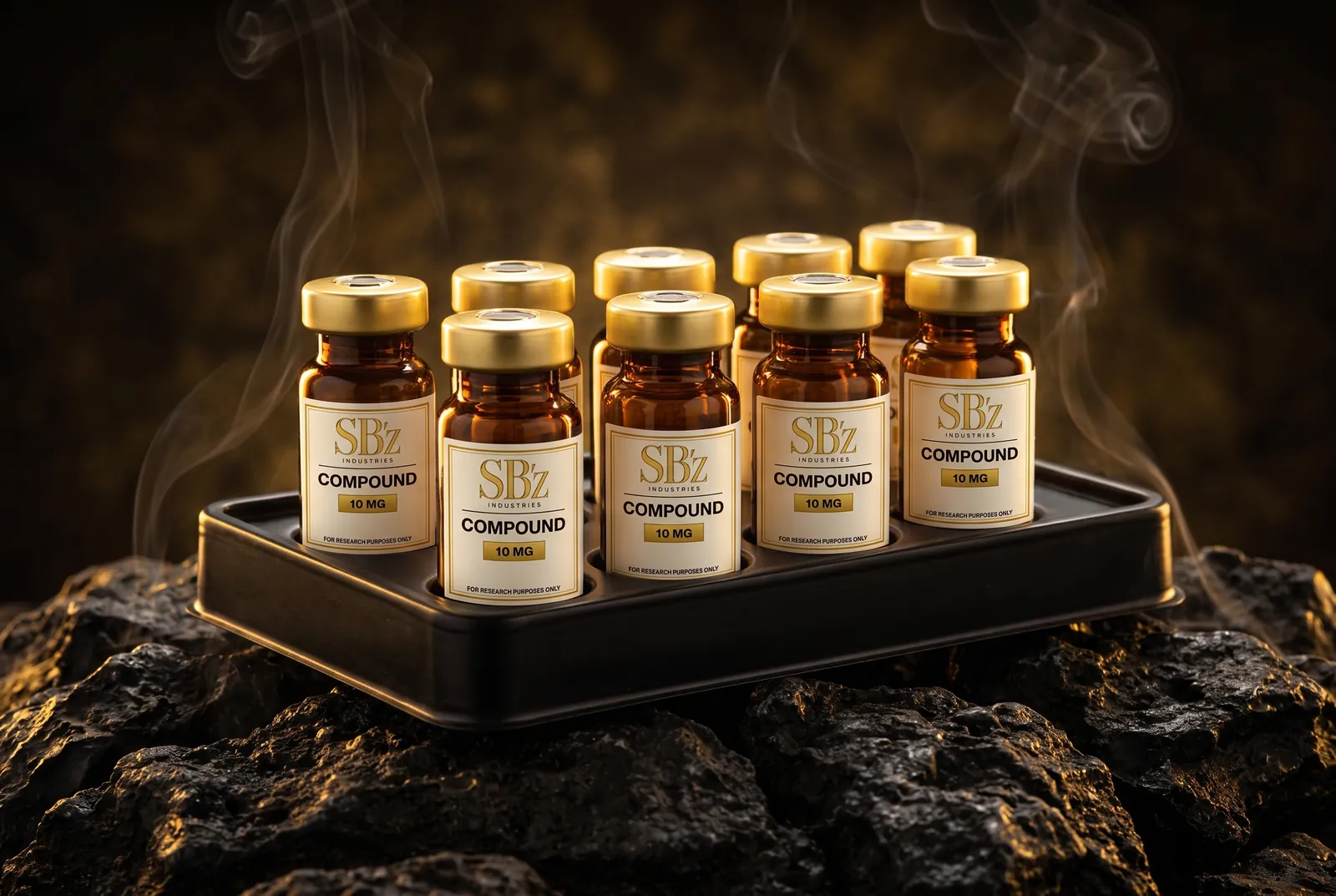
When the chain is complete it is cut free, purified, and freeze-dried into the powder you see in the vial. The acid used in that last cutting and cleaning step, called TFA, usually stays behind as a salt on the peptide, which is why certificates sometimes mention it [4].
The steps can go wrong in small ways: a link missed, a link doubled, a chain cut short. That is why testing matters more than the name on the label.
How to judge a vial
The two tests that matter most
Identity, by mass spectrometry. This weighs the molecule. If the weight matches the compound on the label, the right chain is in the vial. A certificate without it can show a pure powder that is the wrong compound. Our guide on HPLC vs mass spectrometry explains the difference.
Purity, by HPLC. This separates the powder into its parts and measures what share is the target compound. It is the number most sellers quote. It only means something alongside the identity test [1].
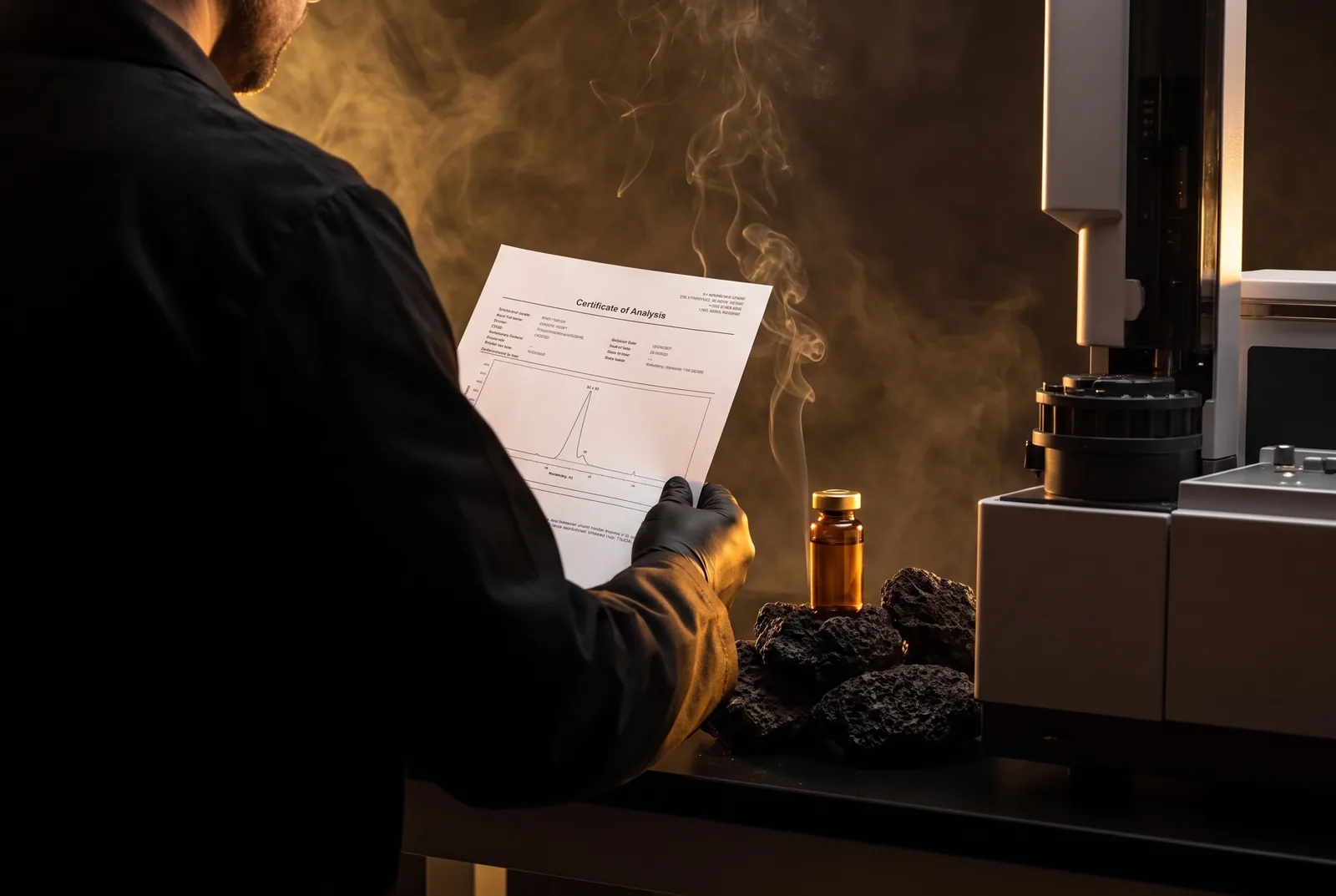
Then check the paper itself. A real certificate names an independent lab, carries a report number the lab will confirm, and is dated. Our guide on how to read a certificate walks through one line by line, and the supplier checklist has fourteen checks you can run on any seller, including this one.
In the lab
From vial to experiment
The powder is mixed with sterile or bacteriostatic water just before use. The reconstitution guide covers the steps and the calculator works out the concentration. The powder is kept in the freezer; once mixed, in the fridge. The storage guide has the details, and the net peptide content page explains why a 10 mg vial holds a little less than 10 mg of the peptide itself.
To see what a specific compound is and what has been published on it, start with the compound guides. For side-by-side reads, see retatrutide vs tirzepatide, GLOW vs KLOW and GLP-1 peptides explained.
Questions
Common questions
What are research peptides?
Short chains of amino acids made in a lab and sold to researchers for experiments: cell work, animal studies and analytical testing. They are sold as chemicals, not as medicines or supplements.
What is the difference between a peptide and a protein?
Length. The FDA calls a chain of 40 amino acids or fewer a peptide and anything longer a protein. Insulin, at 51 amino acids across two chains, sits just past the line in most descriptions and is often called a small protein.
What does research use only mean?
The product is sold for laboratory research and nothing else. It has not been approved as a drug, it is not a supplement or cosmetic, and it is not for use in people or animals outside a research setting.
How are research peptides made?
Almost always by solid-phase peptide synthesis. The chain is built one amino acid at a time while anchored to tiny resin beads, then cut free, purified and freeze-dried into a powder.
Why do they come as powder?
Freeze-dried powder keeps far longer than a peptide in water. The powder is mixed with sterile or bacteriostatic water in the lab when it is needed.
How do you know what is in the vial?
From a certificate of analysis. A good one names an independent lab, confirms the compound by mass spectrometry, measures purity by HPLC, and has a report number the lab will confirm. Where we have one posted, it is on the product page.
Are research peptides legal to buy?
Selling chemicals for laboratory research is a normal, long-standing trade. What matters is how they are sold and used: a product sold for research is not approved for use in people, and a seller who markets it as a treatment is selling an unapproved drug.
Sources
Every paper mentioned on this page
Each one links to its record on PubMed, the US National Library of Medicine database. Checked on 29 September 2026.
- Synthetic pharmaceutical peptides characterization by chromatography principles and method developmentSharma and colleagues. Journal of Separation Science, 2022. A review of how made-in-the-lab peptides are checked: HPLC, mass spectrometry and related methods. Also gives the FDA line between a peptide and a protein.
- Bruce Merrifield and solid-phase peptide synthesis: a historical assessmentMitchell, Lawrence Livermore National Laboratory. Biopolymers, 2008. The history of the method almost every peptide on the market is made with.
- Therapeutic peptides: Historical perspectives, current development trends, and future directionsLau and Dunn. Bioorganic and Medicinal Chemistry, 2018. An overview of peptides that have reached human studies, going back to insulin in the 1920s.
- Towards a Consensus for the Analysis and Exchange of TFA as a Counterion in Synthetic Peptides and Its Influence on Membrane PermeabilityErckes and colleagues. Pharmaceuticals, 2025. Why lab-made peptides usually come as TFA salts, and how that salt is measured and swapped out.
In the catalog
Research peptides
Every compound tested by an independent lab, with the certificate on its product page. For laboratory research use only.
Elsewhere