

Online ordering is open. Ships in 1 to 2 business days. Tracked 2-day shipping, plain box. Every compound third-party tested

For laboratory and research use only. Not for human or veterinary use.

CJC-1295 and Ipamorelin:
two doors to the same gland

The most common pairing in research peptides, explained. What each one copies, why sellers put them in one vial, and the DAC question most labels skip.

29 vs 5amino acids
2different receptors
0published studies on the pair

The short answer

Same gland, different doors

Growth hormone is made in the pituitary, a pea-sized gland under the brain. The cells that make it have more than one door. Two of them matter here.

CJC-1295 is a lab-made copy of the first 29 amino acids of GHRH, the brain's own "release growth hormone" signal, and it knocks on the GHRH door [1] [2]. Ipamorelin is a much smaller peptide, just five amino acids, that knocks on a different door: the receptor for ghrelin, a hormone from the stomach [4] [5].

Because the two use different doors, sellers put them in one vial. That pairing is a seller convention: no published study has tested the mix itself.

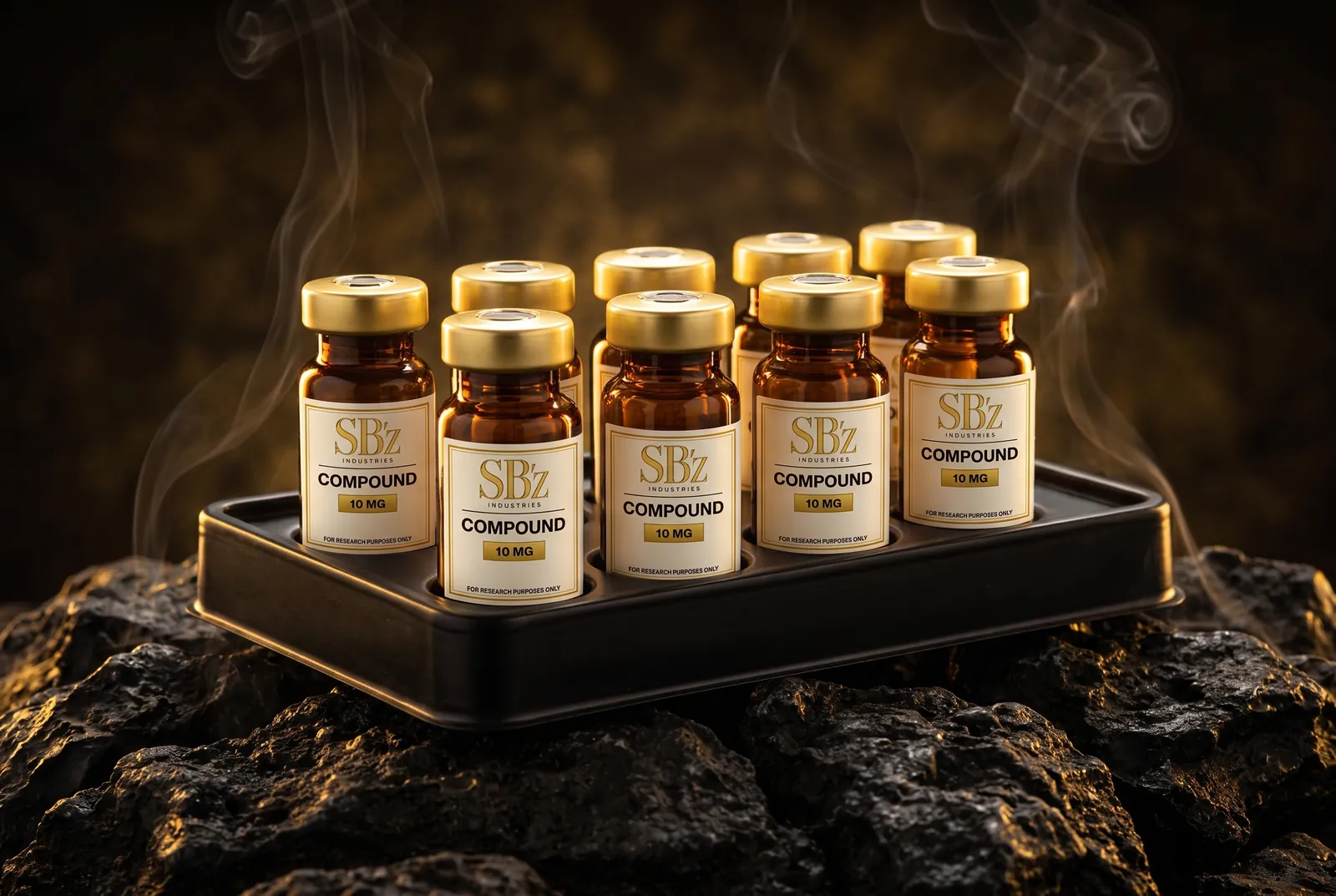
A tray of labelled research vials.

Side by side

The two, compared

CJC-1295Ipamorelin
CopiesGHRH, the brain's growth hormone release signalWorks through the ghrelin receptor
Length29 amino acids5 amino acids
ReceptorGHRH receptorGhrelin (growth hormone secretagogue) receptor
First described2005, by ConjuChem1998, by Novo Nordisk
Tested inPituitary cells, rats; the DAC form in healthy adultsPituitary cells, rats, pigs
Sold hereOn its own, $50; and in the blendIn the CJC-1295 + Ipamorelin blend, $55

The label question

CJC-1295 with DAC and without DAC

The natural GHRH signal lasts minutes. The chemists who made CJC-1295 in 2005 added a small chemical hook, called DAC, that lets the peptide grab onto albumin, a protein always floating in the blood. Riding on albumin, it was still in rat blood after more than three days [2].

Today "CJC-1295" is used for two different things. With DAC is the original, long-acting version. Without DAC, also sold as Mod GRF 1-29, is the same modified 29-amino-acid chain without the hook. They are different compounds with different molecular weights.

This matters for reading research. The published human trials on CJC-1295 used the DAC form [3]. The form without DAC does not have its own. Ask the seller which form a vial holds, and check the molecular weight on the certificate: the DAC form is noticeably heavier.

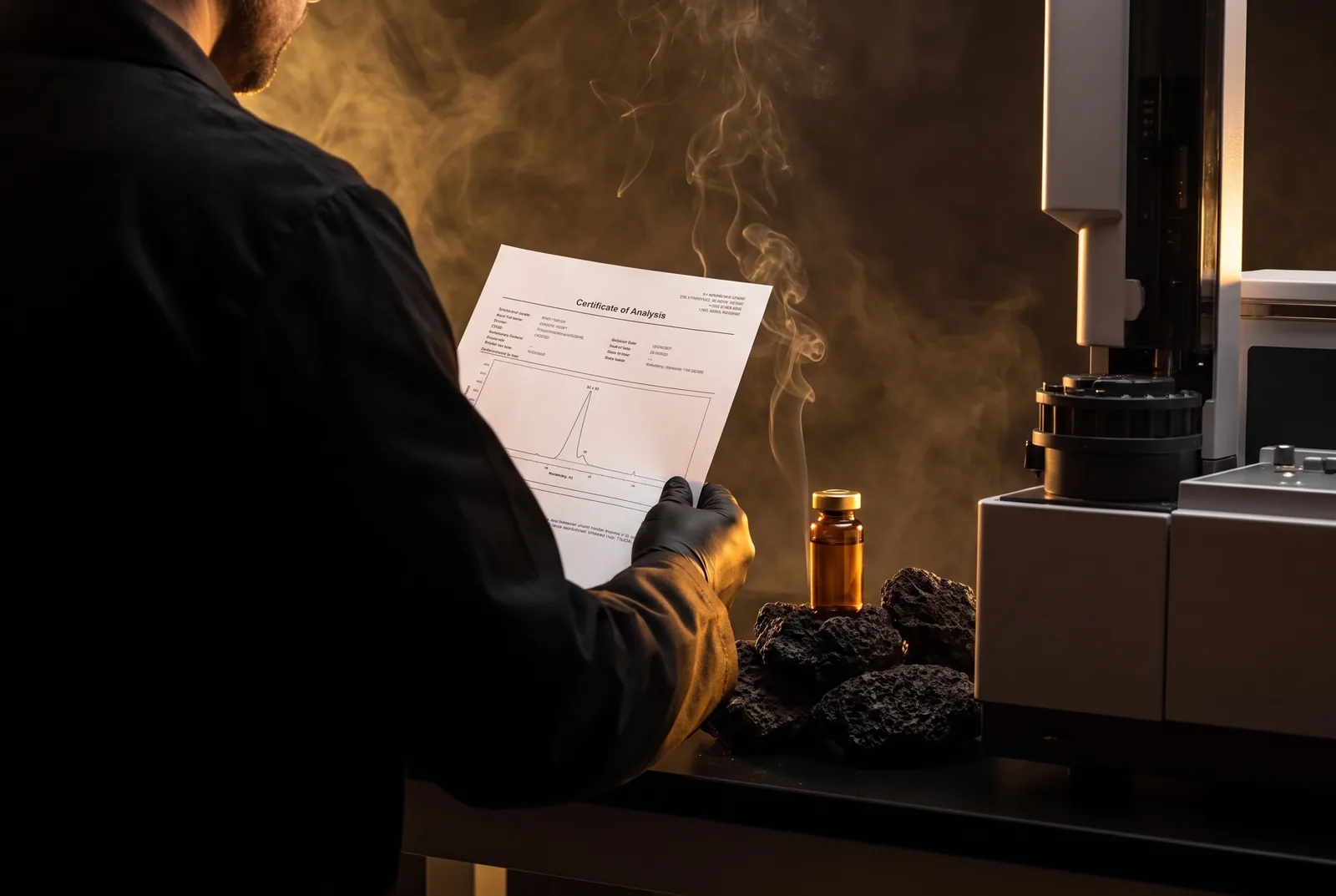
A person reading a printed laboratory report.

The research

What each one has been studied in

CJC-1295

2005, rats. The discovery team, at a Canadian company called ConjuChem, built three hooked versions of the GHRH fragment and tested them in pituitary cells in a dish and in rats. The best one became CJC-1295 [2].

2006, people. Two placebo-controlled trials in healthy adults aged 21 to 61 tracked growth hormone and IGF-1 levels in blood over several weeks, using the DAC form [3]. We do not summarise the results, for the reason below.

Ipamorelin

1998, rats and pigs. Novo Nordisk chemists described ipamorelin as a five-amino-acid peptide and tested it in rat pituitary cells, in rats, and in pigs [4].

Why it is called selective. In the pig tests, two older compounds of the same type also raised the stress hormones ACTH and cortisol. Ipamorelin did not, even at much higher amounts, so the authors called it the first selective one of its kind [4].

How its receptor was found. Lab-made peptides like this came first; the receptor they use was found later, and then ghrelin, the body's own key for it [5].

For the lab

Singles, blend, or a relative

CJC-1295 is sold here on its own and in the CJC-1295 + Ipamorelin blend. The amount of each ingredient in the blend is on its label and certificate. For a close relative of CJC-1295 that is also a copy of the first 29 amino acids of GHRH, see ipamorelin vs sermorelin. Both ship as freeze-dried powder; the reconstitution guide covers mixing.

Questions

Common questions

What is the difference between CJC-1295 and ipamorelin?

They reach the same gland through different doors. CJC-1295 copies GHRH and works on the GHRH receptor. Ipamorelin is a much smaller peptide that works on the ghrelin receptor. Both receptors sit on the pituitary cells that make growth hormone.

Why are they sold together?

Because they use different receptors, sellers pair them in one vial. It is a seller convention. No published study has tested the two together as a mixed product.

What is the difference between CJC-1295 with DAC and without DAC?

DAC is a chemical add-on that lets the peptide latch onto albumin in the blood, which keeps it around far longer. The original CJC-1295 from the 2005 discovery paper has it. "CJC-1295 without DAC," also called Mod GRF 1-29, is the same core chain without the add-on.

How can you tell which form is in a vial?

Ask the seller, and check the molecular weight on the certificate. The DAC form is noticeably heavier than the form without it, because the add-on is extra mass. A certificate that does not state the form or the weight does not answer the question.

Was the human study on CJC-1295 done with the form most sellers carry?

Not necessarily. The published human trials used the long-acting DAC form. Much of what is sold today as CJC-1295 is the form without DAC, which does not have its own published trials.

What does "selective" mean for ipamorelin?

In the 1998 discovery paper, ipamorelin was tested in pigs against two older compounds of the same type. The older ones also raised two stress hormones, ACTH and cortisol. Ipamorelin did not, so the authors called it selective.

What does research use only mean here?

Both are sold for laboratory research and nothing else. They are not drugs or supplements, and they are not for human or veterinary use.

Sources

Every study mentioned on this page

Each one links to its record on PubMed, the US National Library of Medicine database. Checked on 29 September 2026.

  1. Regulation of the pituitary somatotroph cell by GHRH and its receptorMayo and colleagues, Northwestern University. Recent Progress in Hormone Research, 2000. A review of GHRH, the natural signal CJC-1295 copies, and the receptor it works through on pituitary cells.
  2. Human growth hormone-releasing factor (hGRF)1-29-albumin bioconjugates activate the GRF receptor on the anterior pituitary in rats: identification of CJC-1295 as a long-lasting GRF analogJetté and colleagues, ConjuChem. Endocrinology, 2005. The CJC-1295 discovery paper. Pituitary cells in a dish, then rats.
  3. Prolonged stimulation of growth hormone (GH) and insulin-like growth factor I secretion by CJC-1295, a long-acting analog of GH-releasing hormone, in healthy adultsTeichman and colleagues. Journal of Clinical Endocrinology and Metabolism, 2006. Two placebo-controlled trials in healthy adults aged 21 to 61, using the long-acting (DAC) form.
  4. Ipamorelin, the first selective growth hormone secretagogueRaun and colleagues, Novo Nordisk. European Journal of Endocrinology, 1998. The ipamorelin discovery paper. Rat pituitary cells in a dish, then rats, then pigs.
  5. History to the discovery of ghrelinBowers, Tulane University. Methods in Enzymology, 2012. How lab-made growth hormone releasing peptides led researchers to find their receptor, and then ghrelin, the natural hormone that uses it.

In the catalog

CJC-1295 and the blend

For laboratory research use only. Every vial ships in a plain box with a packing slip.

Fast dispatchShips in 1 to 2 business days
Plain packagingNo exterior branding
Tracked shippingTwo business days, flat rate
Third-party testedCertificate on every product page