

- 1989
- Year of a paper applying CE to peptide mixtures
- 9
- Native hormone forms separated in one 1998 study
- 100-10,000x
- Sensitivity gain range in one 1999 CE study
The short answer
Why would a lab use a second purity method?
Many certificates for a research peptide name HPLC, the lab's purity test. HPLC pushes a liquid through a packed tube and sorts peptides by how strongly each one clings to the packing. Capillary electrophoresis, or CE, sorts them by another rule. It uses an electric field inside a glass tube thinner than a hair. Two different rules can catch two different kinds of problems.
Peptide chemists have used both for decades. A 1996 review from the Salk Institute followed their high-pressure liquid chromatography work from 1975 and described CE buffers as an orthogonal approach to determining peptide purity [1]. Orthogonal just means a second method that works on a different principle.
This page explains what CE is, what the papers looked at, and what to read on a report. It does not rank the two methods. It also does not say any one report needs both.

The method
What is capillary electrophoresis?
A capillary is a very thin glass tube. In CE, the tube is filled with a liquid called a buffer. A tiny plug of sample goes in at one end, and the lab applies a high voltage across the tube.
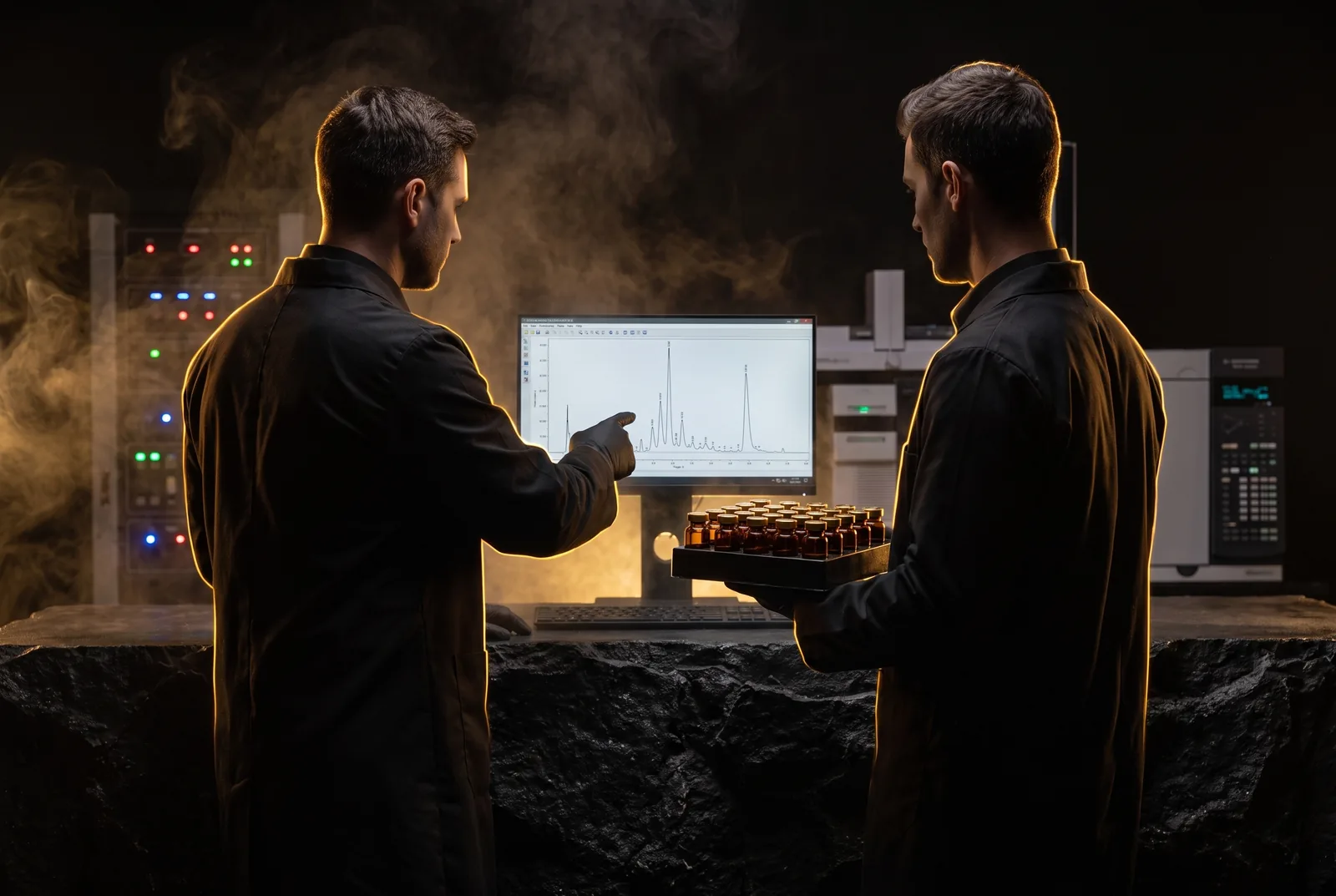
Peptides carry small electric charges, so they move through the buffer. How fast each one moves depends on its charge and its size. That speed is called electrophoretic mobility. A detector at the far end records each peptide as it passes, and the result is a chart with one peak per group of molecules that moved together.
A 1989 paper in Analytical Chemistry described free-solution CE for mixtures of proteins and peptides. Its examples included checking the purity of peptide samples, checking how uniform a sample was before sequencing, and identifying peptides by their mobility values [2].

- 01
Fill
A glass capillary is filled with a liquid buffer.
- 02
Load
A tiny plug of dissolved sample enters one end.
- 03
Apply voltage
Charged molecules move through the buffer at different speeds.
- 04
Detect
A detector at the far end records each group as a peak.
Side by side
How is CE different from HPLC?
HPLC, in its common reversed-phase form, sorts peptides by how oily they are. The oilier ones cling longer to the packing. CE sorts them by charge and size. Because the rules differ, the two charts can look different for the same sample. A mix that looks like one peak in one method can split into two in the other.
One paper shows why the details matter. Miller and Rivier of the Salk Institute wrote that very oily peptides often gave broad, tailing peaks or even dropped out of solution in plain water buffers. They tested buffers that included acetonitrile, methanol or isopropanol on gonadotropin-releasing hormone, corticotropin-releasing factor and analogs [3].
The same paper took nine native forms of the first hormone. Several had identical formal charges, and the method still separated them. The authors read this as a sign of a mixed mechanism. It sorted by charge and structure, and also by how the molecules touched the capillary wall [3].
The two methods in plain terms
| HPLC | CE | |
|---|---|---|
| Sorts peptides by | How strongly each clings to a packed column | Charge and size in an electric field |
| Runs in | A packed tube with liquid pushed through | A thin glass tube filled with buffer |
| Often called | RP-HPLC | CE or CZE (capillary zone electrophoresis) |
What the papers looked at
What can CE find in a peptide sample?
A 1999 paper from the University of Buenos Aires used CE with an on-line concentrating step on a chemically made peptide fragment. The step gave a sensitivity gain ranging from 100- to 10,000-fold, and the paper also discusses how CE compares with HPLC for selectivity and sensitivity [4].
A 2024 paper from Chimie ParisTech joined CE to a mass spectrometer. The mass spectrometer reads the weight of what comes out. The team tested a short synthetic model peptide made by two routes, purified or not, in the low 0.1 milligram per milliliter range with no sample treatment. The method showed the exact sequence and found impurities, which the authors identified as truncated or non-deprotected sequences, with their relative amounts [5].
A 2023 paper from Zhejiang University tried a CE version called CE-SDS on insulin glargine, a small protein, after heat and light damage. CE-SDS separated monomers, dimers and trimers. Size-exclusion HPLC on the same samples showed a single aggregate peak. The authors called CE-SDS a complement to that HPLC method [6].
The three papers above each used a model peptide, a fragment or one small protein. None of these abstracts describes testing a supplier's product. So they show what CE can look at, not what any one product contains.
Truncated
A chain that stopped growing before it reached full length.
Non-deprotected
A chain still carrying a protecting group left from the build.
Dimer
Two peptide or protein molecules joined together.
Aggregate
A clump of several molecules stuck together.
Before you order
What should you read on a certificate?
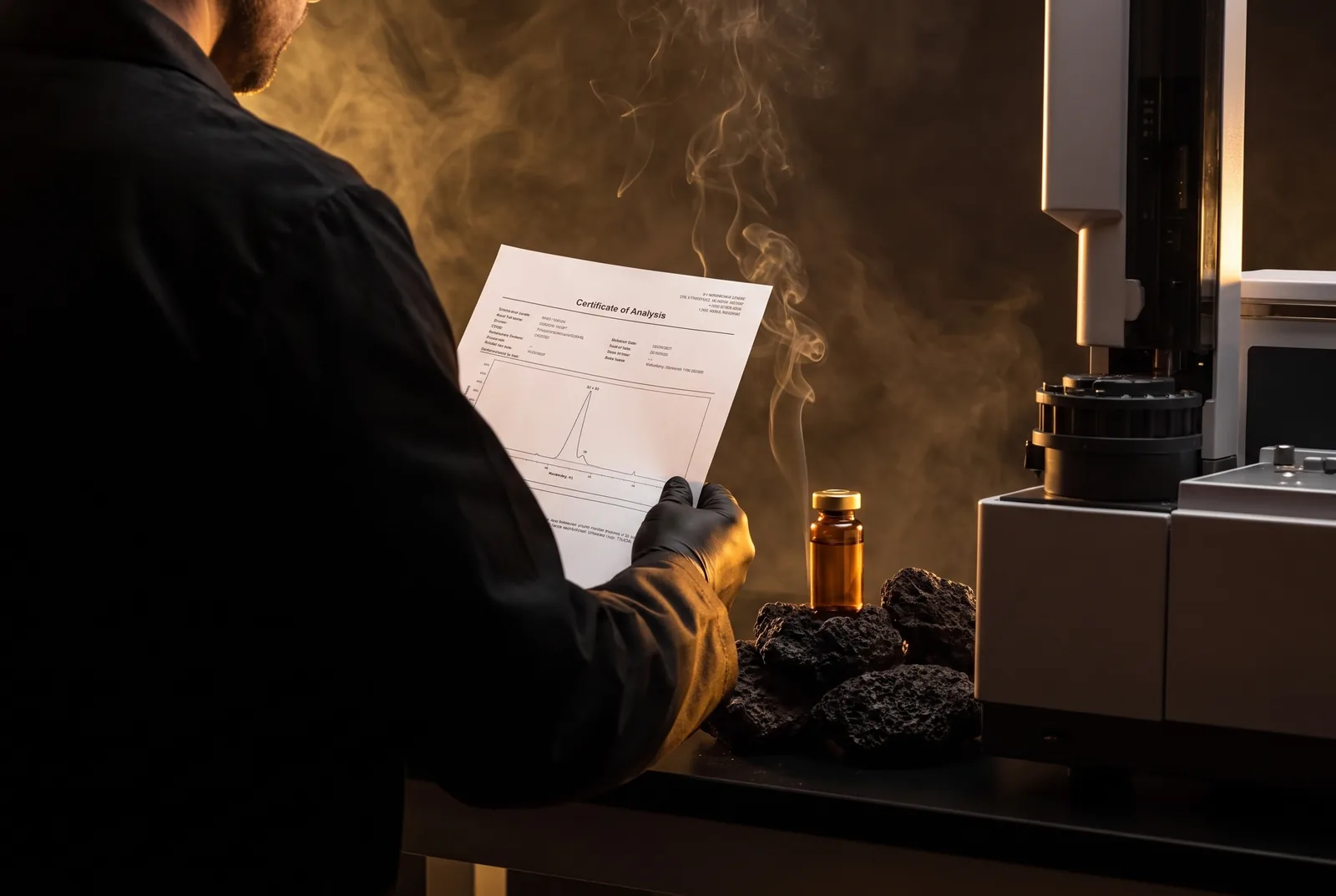
Start with the method line. A certificate of analysis should say how purity was measured. Some reports name one method and some name two. Think of two people checking the same box from different sides: each can notice something the other cannot. The papers above treat a second method as extra information, and none of them says a report must have one.
Next, look for the lab's name and whether the compound name matches the vial label. We file one certificate for each product, so read it for the product you are holding. Our quality page explains how we handle testing.
If the method line is unclear, ask the supplier which methods the lab ran and for the lab's name. Our supplier checklist lists more questions worth asking, and the glossary defines the terms above.
- Which method does the report name: HPLC, CE or both?
- Is the testing lab named?
- Does the compound name match the vial label?
- Is the report for this product?
- Is the date on the report?
Questions
Common questions
What does CE stand for?
Capillary electrophoresis. It is a lab method that sorts molecules by charge and size as they move through a thin glass tube.
Is CE better than HPLC?
This page does not rank them. In a 1996 review, the authors described CE as an orthogonal approach to HPLC, meaning a method that works on a different principle.
Does a certificate have to list CE?
No paper cited here says it must. Read which methods the report names and which lab ran them.
What is CZE?
Capillary zone electrophoresis. It is the plain form of CE, where molecules separate by charge and size in a buffer.
Did these papers test supplier vials?
Not in the abstracts we read. The studies described used model peptides, a synthetic fragment, hormone peptides and one small protein, plus some larger proteins in the 1989 paper.