
- 60x
- Upper gap in breakdown rate, dry solid vs solutionTwo of four model peptides in one lab study
- pH 4.5
- Where one peptide stayed relatively stable in waterTested in solution at 37 C
- 33 to 75%
- Humidity range that moved breakdown rates in dry solids
The short answer
What is the difference between freeze-dried and liquid?
Most research peptides ship as a freeze-dried powder. A liquid peptide is the same chain of amino acids, already dissolved in water or a buffer. The chain is the same. What differs is whether water is in the vial.
That matters because water can allow slow chemical changes. One lab study compared model peptides in solution with the same peptides as dry solids. Two of the four broke down up to 60 times slower as a dry solid. The other two broke down at about the same rate [1].
So the form on the label is a real detail, not a footnote. This page explains both forms in plain words and lists what to look for on a listing.
Two forms, side by side
- Most of the water removed before sealing
- Looks like a dry cake or loose powder
- Called lyophilized on labels and certificates
- Lab papers measured how moisture and temperature affect breakdown in dry solids
- Peptide already dissolved in water or a buffer
- Water is present from the start
- The liquid should be named on the label
- Lab papers measured breakdown and clumping in solution
Plain words
What does freeze-dried mean?
Freeze-drying is also called lyophilization. A peptide solution is frozen first. Then the ice is removed under vacuum, so it turns straight to vapor and never melts. What is left is a dry cake or a thin layer of powder in the vial.
One reason labs choose this form is simple. One paper notes that proteins are relatively unstable in water, so they are often formulated and stored as lyophilized powders [6].
Lyophilized is the word you will see on certificates and product pages. It means the same thing as freeze-dried.
What water does
Why does water matter to a peptide?
A peptide is a short chain of amino acids. Some links in the chain can change on their own, slowly, when water is near. Two well known changes are deamidation and the shifting of aspartic acid, called isomerization [1].
The solution data follow a pattern. One group held a peptide in water at 37 C and changed the pH. It stayed relatively stable at pH 4.5. At pH 5.5 to 6.5 the main change was oxidation. At pH 7.5 to 8.5 the main change was deamidation, and the peptide also clumped together [2].
A second group looked at glucagon. Their paper opens by calling it unstable in water, with both breakdown and clumping [3].
Deamidation
A small amide group comes off one amino acid in the chain.
Isomerization
An aspartic acid rearranges into a different shape inside the chain.
Oxidation
Oxygen reacts with part of the chain, often a methionine.
Aggregation
Chains stick together and form clumps.
Not bone dry
Does freeze-drying stop all change?
No. For some peptides a dry solid changes more slowly, but it is not frozen in place. The details of the dry state still matter. One group made freeze-dried batches of a six-amino-acid peptide and varied several things. Residual moisture, temperature and the type of bulking agent, the filler that shapes the cake, all had a significant impact on breakdown [4].
Water content stood out in another test. A model peptide was held in dry solids at humidity from 33 percent to 75 percent. Over that range the rates of the main breakdown steps rose by orders of magnitude [5].
Moisture also matters for larger molecules. Lyophilized insulin held at 50 C took up water. Its structure changed more, and it formed more clumps, as humidity rose [6].
The takeaway is plain. Dry matters, and so does how dry the powder stays.
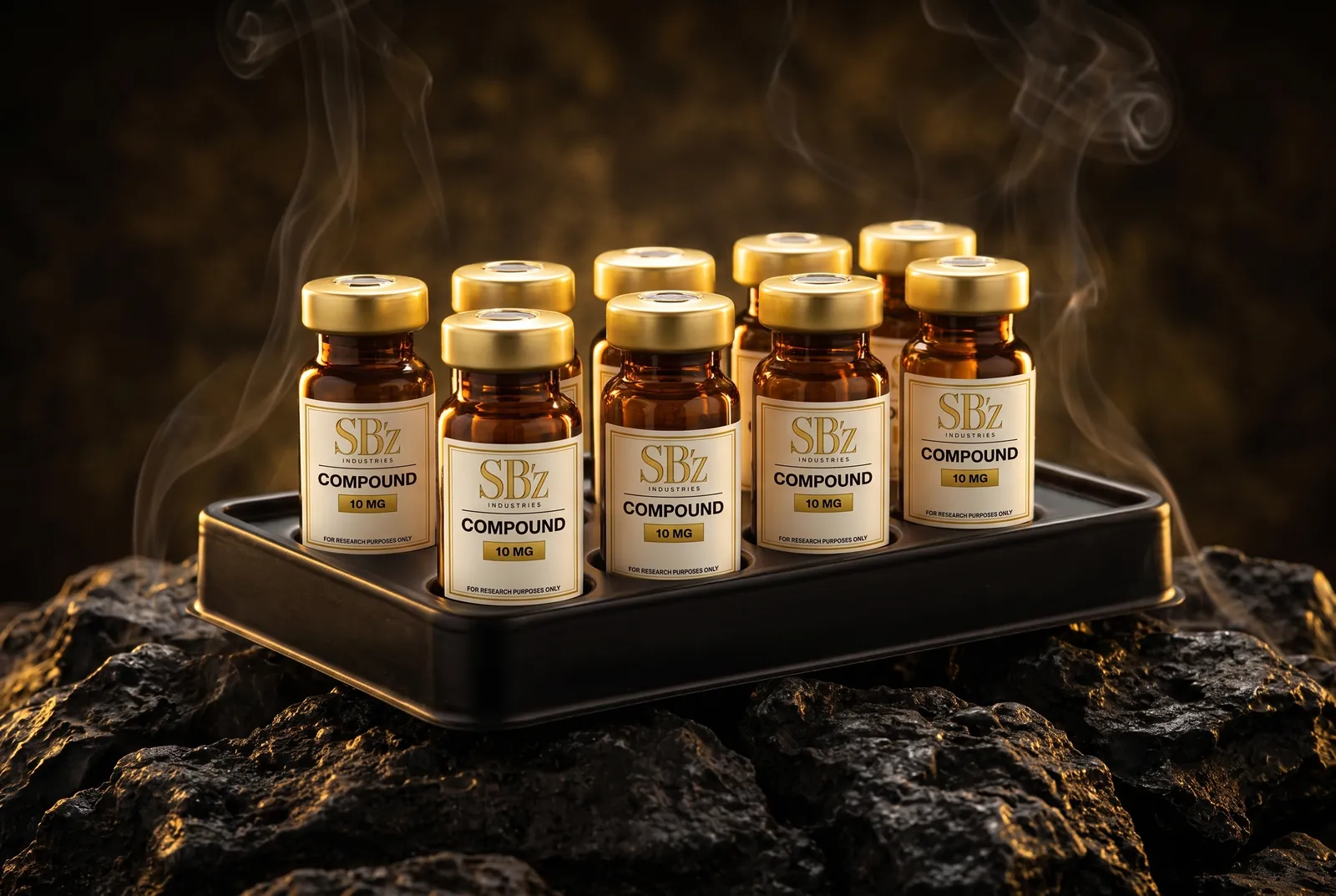
Side by side
How do the two forms compare on a listing?
Here are questions a buyer can check, set side by side. None of this is a promise about any one product. It is a way to compare listings.
Notice that the certificate rows match. A certificate should list identity and purity for either form, as the certificate of analysis explains.
Read down the first column as a short script for an email to a supplier. Ask each supplier the same questions.
Freeze-dried vs liquid
| Question | Freeze-dried powder | Ready liquid |
|---|---|---|
| What is in the vial? | Peptide with the water removed | Peptide dissolved in water or a buffer |
| Where does water come in? | Little at first, plus any moisture that gets in later | Present from the start |
| What did lab papers measure? | Moisture, temperature and filler in dry solids | Deamidation, oxidation and clumping at set pH values |
| What should the label name? | The form (lyophilized) and the test date | The form, the liquid it is in, and the test date |
| What should the certificate show? | Lab, test date, identity and purity | Lab, test date, identity and purity |
| What to ask the supplier | How the vial is sealed and shipped | What the liquid is, and when it was tested |
Limits
What do these papers not tell you?
These are lab papers on model peptides and a few well known ones. They show what chemistry can happen. They do not say how any single vial behaves. Each peptide has its own sequence, and the sequence decides which links are weak. In the same Kansas study, one sequence deamidated up to 38 times faster in solution than the others [1].
The papers also used their own fillers, buffers and temperatures. A vial from a supplier is a different system. That is why the certificate matters. It is a test of that product, not a general paper. You can read how testing works on the lab page.
A ready liquid adds more unknowns. The liquid and its pH shape the result, and a label may not list them. When a listing leaves those out, treat the gap as a question for the supplier.
- It can show which kinds of change are possible
- It can show that water and moisture matter
- It cannot tell you how one vial behaves
- It cannot replace a certificate for the product in your hand
Before you choose
What should you check before choosing a supplier?
Start with the form. A listing should say freeze-dried or liquid. If it says nothing, ask.
Then match the product on the vial to its certificate. The certificate should name the lab and the test date. The supplier checklist covers the rest, and the quality page shows how testing works.
Last, look at how the box arrives. Terms such as lyophilized are explained in the glossary.
- The listing names the form: freeze-dried or liquid
- The product name is printed on the vial
- A certificate matches that product
- The certificate names the lab and the test date
- A liquid names what it is dissolved in
- The seal and the box look intact on arrival
Questions
Common questions
Is a freeze-dried peptide the same peptide as the liquid?
Yes. The chain of amino acids is the same. The difference is whether water is in the vial.
What does lyophilized mean?
It means freeze-dried. The solution is frozen and the ice is removed under vacuum, which leaves a dry cake or powder.
Why do most research peptides ship as powder?
Many research peptides ship as powder. One paper notes that proteins are relatively unstable in water and are often stored as lyophilized powders.
Does this page tell me how to handle a vial?
No. It describes what the two forms are and what lab papers measured. It is not handling or use guidance.