
- 6
- Accredited labs in one blind comparisonChloride in water, not peptides
- 8
- Areas checked in one ISO/IEC 17025 survey
- ~25%
- TFA salt by mass in one reference peptideCounted as an impurity, not as peptide
The short answer
What makes a testing lab worth trusting?
A good lab is one you can check. It is separate from the seller. It works under a recognized quality standard. Its report says what was measured and how. Those three things tell you more than the words "third-party tested" on a label.
This page takes them one at a time. Where a point is about a specific method or result, it rests on a published study. The page ends with questions you can ask any seller about the lab behind a report.
None of this is about what a peptide does. It is only about how a sample gets measured, and how much weight a measurement deserves.
Who is the lab
What does "third party" really mean?
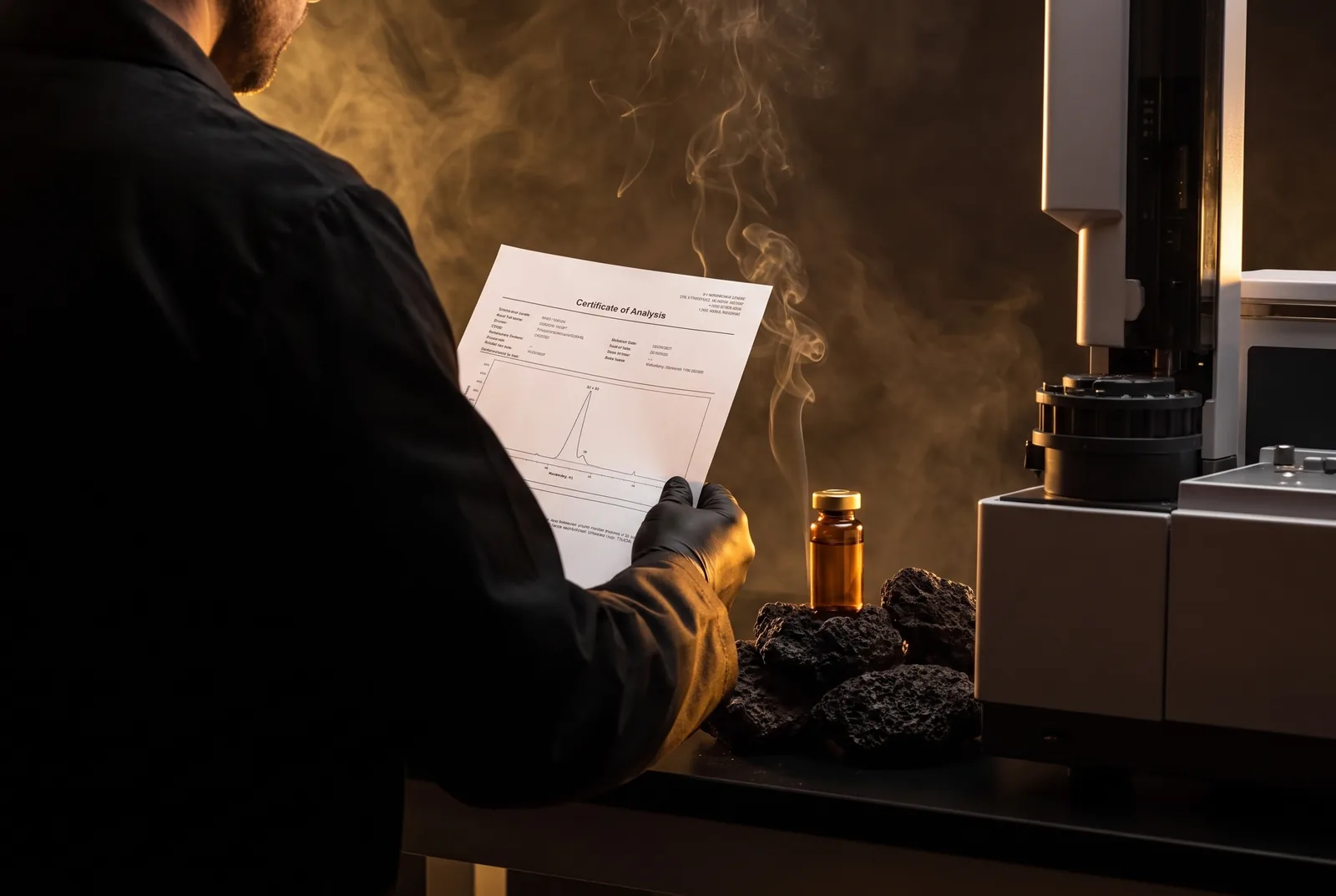
Third party means the lab is not the seller and not the maker. It has no stake in the product. That is why an outside report counts for more than a note a seller wrote about its own product.
Independence is the first check, not the last. It tells you who measured. It does not tell you how well they measured, or which sample they were handed. A report describes the sample the lab received, and nothing else.
So look for the basics on the paper itself. The lab should have its own name, an address, a report number and a date. A report that names only the seller, or carries no date, gives you nothing to check.
- The lab's own name and address
- A report number you can quote
- A date
- The compound name, spelled the same as the listing
- The method behind each number
The quality standard
What does ISO/IEC 17025 cover?
ISO/IEC 17025 is an international standard for testing and calibration labs. A lab that is accredited has been audited against it by an outside body. The standard is about how a lab works, not about any one compound.
One survey of 28 forensic genetics labs in Brazil checked eight areas of the standard [1]. The list is a picture of some of what the standard looks at. It is shown in the table.
Accreditation is also ongoing work. The radiation safety lab at the IAEA described moving to the 2017 edition in stages. It ran a gap analysis, updated its documents and trained staff. It then kept going with audits, management review and proficiency testing [2].

Eight areas, in plain words
| Area in the survey | What it means |
|---|---|
| Personnel | Staff are trained and their skills are checked |
| Equipment | Instruments are kept in working order |
| Calibration | Instruments are checked against known values |
| Method validation | A test is proven out before it is used |
| Proficiency testing | The lab measures samples whose answers are known elsewhere |
| Internal auditing | The lab checks its own work on a schedule |
| Risk management | The lab plans for what could go wrong |
| Critical review | Management reviews the system and its results |
What a badge can't promise
Do accredited labs always agree?
Not always. In one blind comparison, six labs accredited to ISO/IEC 17025 measured chloride in water samples [3]. Some samples were simple, made-up solutions. Others were collected from a test facility that mimics a real process.
The labs did significantly worse on the real samples than on the made-up ones. The authors suggested that simple made-up samples can paint an overly rosy picture of what labs manage in routine work.
That was one study of one measurement, and it did not involve peptides. We use it only as a reminder. Accreditation and agreement are two different things, so the badge is where your checking starts.
Methods on the report
Which tests should a purity report name?
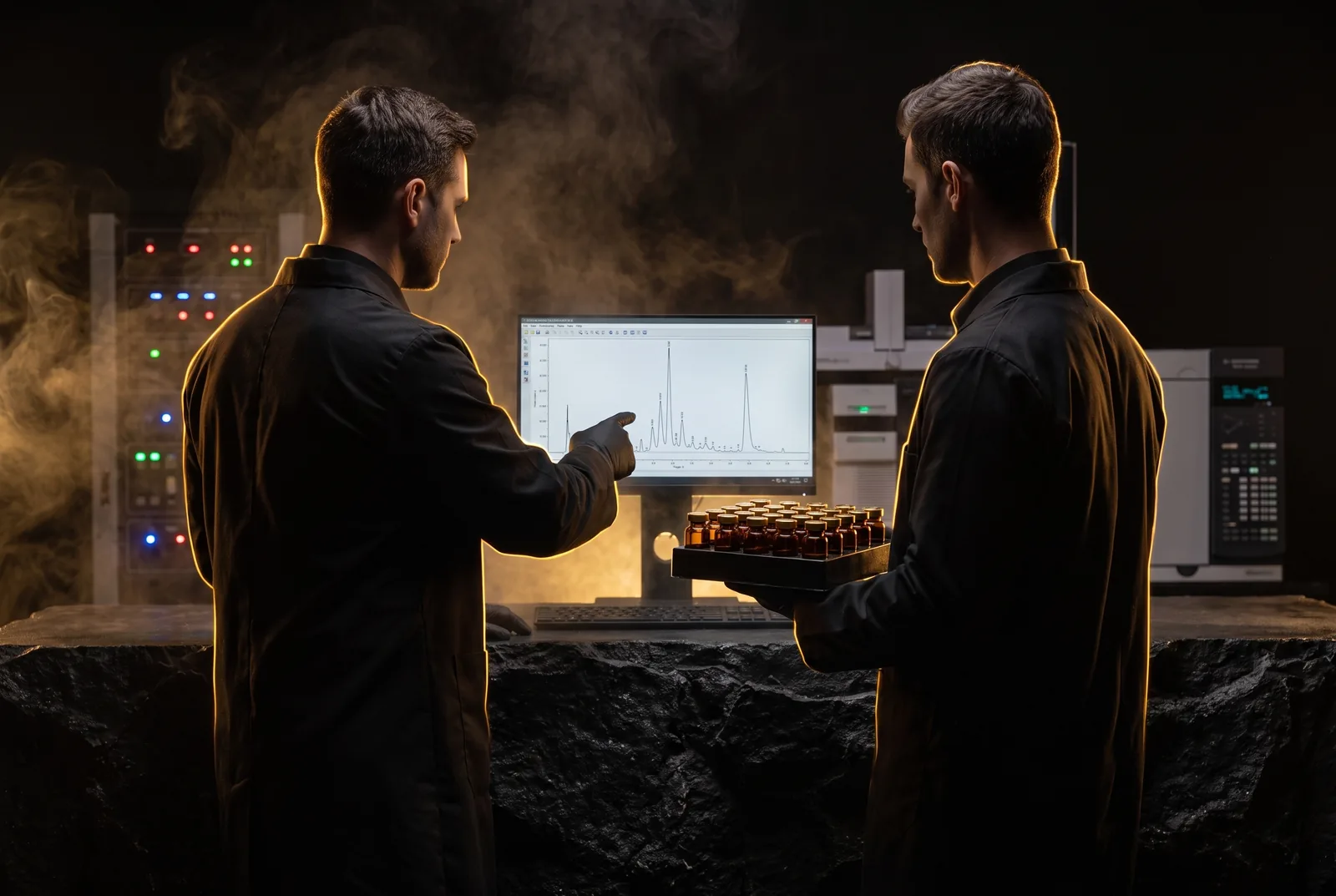
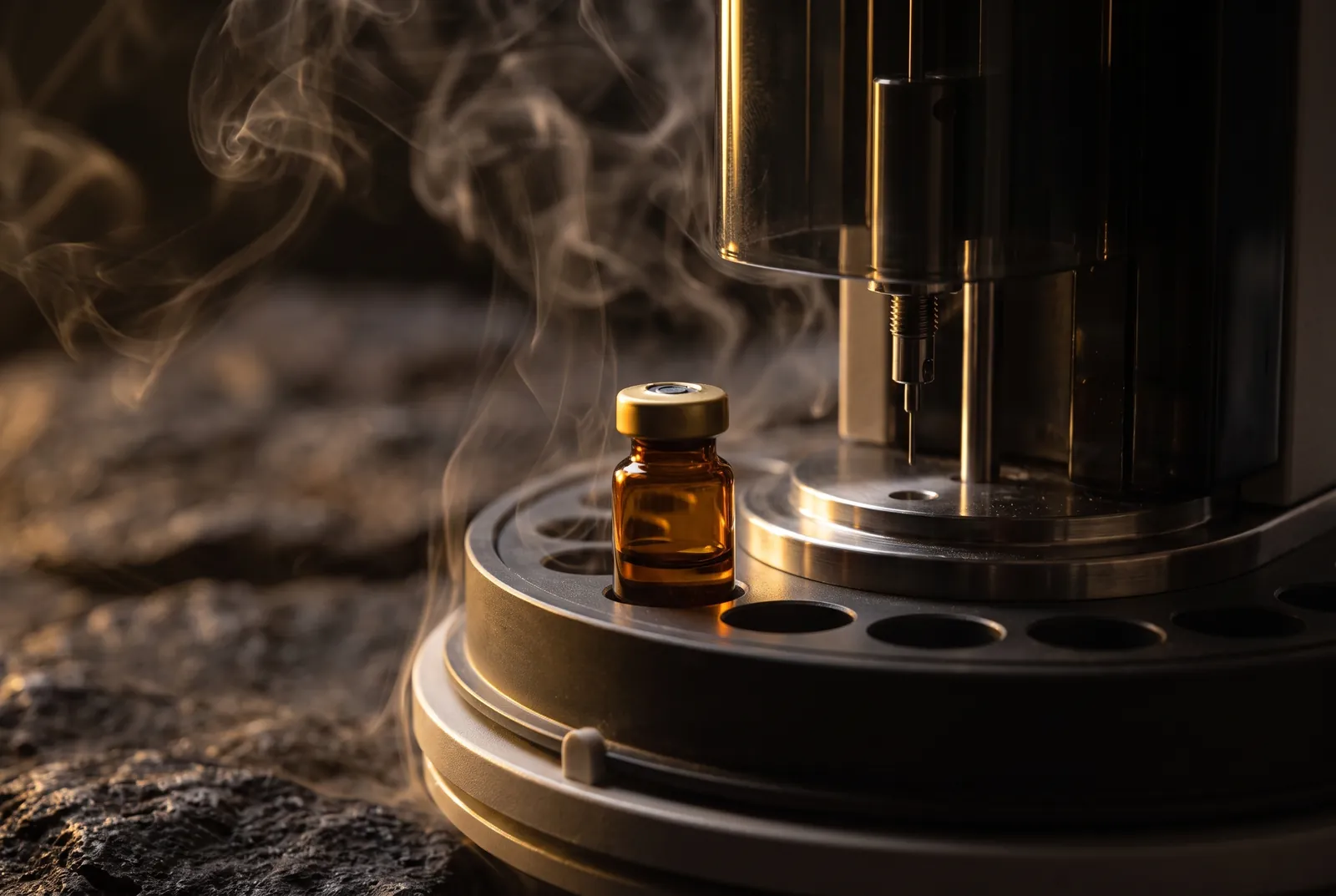
A purity number with no method behind it is thin. The usual method for research peptides is HPLC. It separates a sample into its parts and measures each one. Mass spectrometry is a second kind of test. It weighs the molecules, so it can confirm which compound is in the vial.
Methods can differ from lab to lab, even for one peptide. A study led by the US Pharmacopeia had labs in several countries measure the nine-residue peptide oxytocin by three methods: an HPLC assay, qNMR and amino acid analysis [4]. The HPLC assay, run against a standard made from the same bulk peptide, varied least between labs.
Some lab-to-lab difference is normal. That is the reason a report should name the method and the standard it used. Without them, two numbers cannot be compared.
- One purity number
- No method named
- No lab report number
- No date
- Purity with the method named
- Identity confirmed by a second test
- Lab name and report number
- A date
Reading the numbers
What can one purity number leave out?
HPLC purity tells you how much of the measured signal belongs to the target peptide. It does not count water or leftover salt. Studies that build reference materials count both, using a mass balance. A mass balance adds up everything in the vial that is not the peptide and takes it away from 100%.
Two examples show the size of the gap. A national metrology lab in Canada worked on a candidate reference material for angiotensin II. It measured the trifluoroacetic acid (TFA) counter-ion, a salt left over from synthesis, at nearly 25% of the mass, and assigned a purity of 691 mg per gram [5].
A study of the peptide sublancin reached a mass-balance purity of 78.60%. The deductions included 5.46% water and 15.48% trifluoroacetate ion [6].
A national metrology institute in China went further for angiotensin I. It used a mass balance, qNMR, Karl Fischer moisture tests, ion chromatography and a mass spectrometry check [7]. A routine report will not run all of that. It does show what a single number can leave out, so ask whether net peptide content was measured.
- Water content
- Counter-ion (salt) content
- Net peptide content
- The standard used for comparison
Before you rely on it
What should you ask about the lab behind a report?
You can run these checks in a few minutes. Start with the lab's name and report number, then work down the steps. Our certificate page shows how a finished report looks, and the testing standard page says how we describe ours.
Remember that a report describes the sample the lab received. Read the date and report number, and compare the compound name to the listing. The supplier checklist covers the rest of what to look at, and the glossary explains terms such as HPLC and counter-ion.
- 01
Name the lab
Find its name, address and report number on the paper.
- 02
Check the standard
Ask which standard it works to, then confirm it with the accrediting body.
- 03
Read the methods
Each number should name the test that produced it.
- 04
Match the details
The compound name and date should fit the listing.
- 05
Ask what is missing
Ask whether water, salt and net peptide content were measured.
Questions
Common questions
What is a certificate of analysis?
It is a report from a lab that lists what it tested in one sample and what it found. A useful one names the lab, the methods and the date.
What is HPLC?
HPLC is a test that separates a sample into its parts and measures each one. For peptides it is the usual way to report purity.
What is a reference standard?
It is a sample with a known identity and content. A lab compares its sample to it, like checking a ruler against a better ruler.
Does accreditation mean two labs give the same number?
No. Accreditation shows that a lab follows an audited system. Labs can still report different numbers, which is why the method on the report matters.
What is net peptide content?
It is the share of the powder's weight that is the peptide itself. The rest can be water and salt.