
- 2
- Methods compared in one 2025 paperReversed-phase and HILIC in one 2025 paper
- 3
- Orthogonal methods in one 2026 paperSize-exclusion, reversed-phase and HILIC
- 10
- Impurities separated by HILIC plus RPFrom the same 2026 paper, not counting oligomers
The short answer
Why can one purity test miss something?
A purity number on a report comes from one way of sorting the sample. If two substances come out of the instrument at the same moment, the test counts them as one peak.
HPLC is the lab's purity test. The sample is pushed through a packed tube, and each substance leaves at its own time. The share of the signal that belongs to the peptide becomes the purity number.
One 2020 paper says routine peptide testing commonly rests on a single reversed-phase method. It adds that closely related impurities with similar sequences can come out together in that run [1].
Orthogonal means two methods that sort by different traits. What hides in one method often shows up in the other. That is why some papers run two methods on the same sample, and why a report that names its method is more useful than one that does not.
Method one
How does the usual method sort a peptide?
Reversed-phase HPLC, or RP-HPLC, sorts molecules by how strongly they cling to an oily surface in the tube. Molecules that cling harder come out later.
It is the common choice for peptides.
Think of sorting a bag of mixed coins by size alone. Two coins of nearly the same size land in the same pile. Sorting a second time by weight would pull them apart.
A 2025 paper on four synthetic cyclic peptides says RP-HPLC alone often gives inaccurate impurity results when many chemically similar impurities are present [2].
- Peak: one bump on the chart, meant to be one substance
- Co-elution: two substances leaving the tube at the same time
- Retention time: how long a substance takes to leave the tube
- Orthogonal: sorting by a different trait than the first method
Method two
What does a second method add?
HILIC is short for hydrophilic-interaction liquid chromatography. It sorts by attraction to a water-loving surface. That is close to the opposite of reversed-phase.
The 2025 paper compared both methods on four cyclic peptides, each nine amino acids long. It tested seven mobile phases, which are the liquids that carry the sample, and three HILIC columns [2].
The authors found the two methods were mutually orthogonal. Most impurities that left early in RP-HPLC left late in HILIC, and the reverse [2].
For a reader, that means a peak that hides in one method sits somewhere else in the other. It is the same idea as the coin sort, applied to molecules that differ by very little.
Same sample, two views
- Sorts by clinging to an oily surface
- The common routine method
- Similar impurities can overlap
- Sorts by attraction to a water-loving surface
- Used in the 2025 paper as the second view
- Early RP peaks tended to come out late
Going further
What is a two-dimensional run?
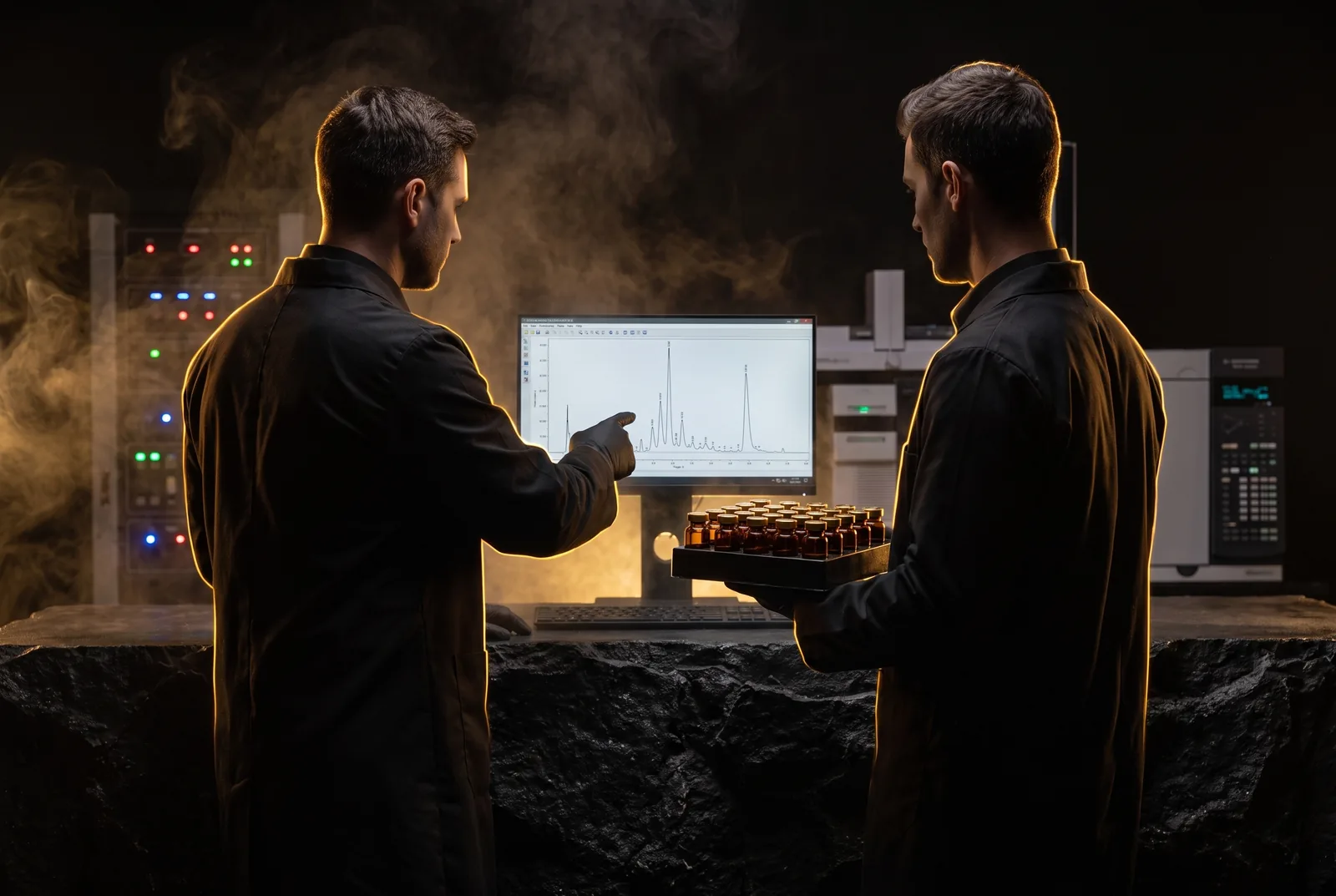
Some labs run both sorts in one go. This is called two-dimensional liquid chromatography, or 2D-LC. Part of the first run is passed straight into a second run.
A 2020 paper built a 2D method from two reversed-phase runs. The first used an acidic liquid, the common generic setup. The second used a basic liquid on a short column [1].
The same paper added more than one detector. These were a UV detector, a charged aerosol detector and a mass spectrometer. It worked through oxytocin as its main example [1].
Each detector sees a different side of the sample, so a hidden peak has fewer places to stay hidden.
- 01
First run
A common acidic gradient sorts the sample.
- 02
Second run
Slices go through a basic liquid on a short column.
- 03
Detectors
UV, charged aerosol and mass spectrometer all read the result.
Other angles
Do labs sort by anything besides oil and water?
Yes. Size, electric charge and mirror-image shape are three other ways to sort a peptide.
A 2026 paper on bivalirudin built three methods: size-exclusion, reversed-phase and HILIC. Size-exclusion found dimers and trimers, which are two or three peptides joined together. HILIC and reversed-phase together separated ten other impurities [3].
A 2002 paper used capillary electrophoresis, which sorts by charge, as a complement to RP-HPLC for recombinant hirudin. The authors wrote that RP-HPLC does not always separate the structural deviants fully [4].
A 2025 paper separated a linear peptide from its ring-shaped version by apparent isoelectric point. That is the pH where a molecule carries no net charge. The values were 6.47 and 5.99. Mass spectrometry checked identity and RP-HPLC checked purity, so three tools covered one pair [5]. A 2018 paper used two columns with opposite handedness to look at amino acid shape in gramicidin and bacitracin hydrolysates [6].
Ways to sort a peptide
| Method | Sorts by | Paper |
|---|---|---|
| Reversed-phase HPLC | Clinging to an oily surface | Karongo 2020 |
| HILIC | Attraction to a water-loving surface | Yoshida 2025 |
| Size-exclusion | Size of the molecule | Vukoja 2026 |
| Capillary electrophoresis | Electric charge | Dönges 2002 |
| Imaged isoelectric focusing | The pH of no net charge | Bloderer 2025 |
| Chiral two-dimensional | Mirror-image shape | Woiwode 2018 |
What to check
What should you look for on a report?
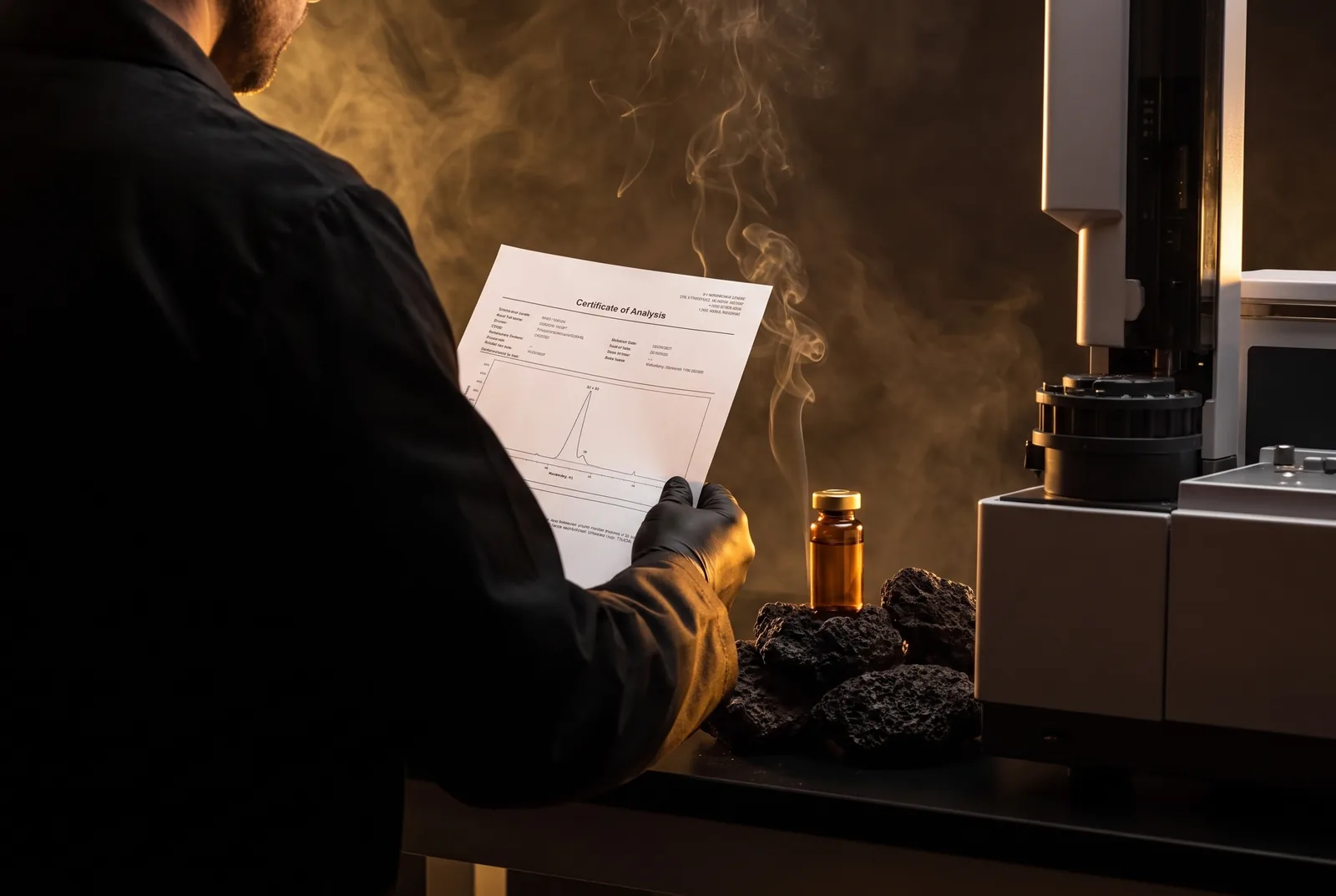
A report is easier to read once you know the number came from one view of the sample. Start with the method line.
Look for the method name next to the purity number. Look for the lab name and report number, so you can check with the lab itself. Look for identity listed apart from purity.
Our certificate of analysis page shows how a report is laid out. The quality page and the lab page explain who tests and how. The supplier checklist covers what else to ask. Unfamiliar terms are in the glossary.
A report that names one method is still a report. The papers above only say what a second method can find. Whether a second method is needed depends on the sample, and the report is where you find out what was run.
- Which method produced the purity number?
- Does the report name the lab and a report number?
- Is identity listed apart from purity?
- Does the report name a second method?
- What does the report leave out?
Questions
Common questions
Is HPLC alone a bad test?
No. It is the common method. The papers cited here say closely related impurities can overlap in it, which is why some labs add a second method.
What does orthogonal mean?
Two methods that sort a sample by different traits. A peak that hides in one method tends to show in the other.
What is HILIC?
A form of liquid chromatography that sorts by attraction to a water-loving surface. In one 2025 paper it gave a second view next to reversed-phase.
Does a second method change the purity number?
It can. It also may leave the number the same and simply confirm the first view. The report shows which.