
- 28
- Amino acids in thymosin alpha-1
- 3108.79
- Daltons for capped thymosin alpha-1, one paper
- 42
- Daltons the acetyl cap adds
The short answer
Are thymosin alpha-1 and TB-500 the same thing?
No. They share a word and little else. Thymosin alpha-1 and TB-500 sit in two different groups of peptides, the alpha thymosins and the beta thymosins [7]. That tissue study reported on both groups, alpha and beta, as separate sets of peptides.
So a listing that says only "thymosin" has not told you which peptide is in the vial. The sequence tells you that, and the measured mass tells you whether the sequence is the one on the label.
This page walks through each name in plain words. Thymosin alpha-1 is a short chain of 28 amino acids. Thymosin beta-4 is a larger chain that binds a cell protein called actin. TB-500 is a name that sellers use, and the papers cited here do not define it.
By the end you will know what to look for on a certificate before you rely on either name.
Thymosin alpha-1
What is thymosin alpha-1?
Thymosin alpha-1 is a chain of 28 amino acids with a small acetyl cap on the first one [4]. Each amino acid in a chain is called a residue. The acetyl cap is a tiny chemical group on the front end of the chain.
The name comes from where it was first found. Early work isolated it from thymic extracts, which are preparations made from the thymus gland [1].
It is also the first 28 residues of a bigger protein called prothymosin alpha, which has 109 to 111 residues [2]. One study found that an enzyme called legumain cuts that larger protein at two spots in lab tests, which releases thymosin alpha-1 and a slightly longer piece, thymosin alpha-11 [1].
The same study found thymosin alpha-1 free in samples from several mammalian tissues. The authors concluded it is naturally present in those tissues.
Making it
Why is thymosin alpha-1 hard to make?
A 2009 paper describes the chain as a difficult sequence [4]. It has several amino acids in a row with bulky side groups, and it tends to fold into flat sheet shapes while it is being built.
The same paper notes that building it takes up to 20 protecting groups, which are small chemical caps that keep side chains from reacting while the chain grows. The paper says it had generally been made by joining pieces in solution. The authors reported a step-by-step build on a PEG resin instead.
There is a second route. A 2013 paper made the acetylated peptide from recombinant prothymosin alpha, which is the larger protein made in bacteria [3]. The team cut it with legumain, then purified the result by chromatography.
They then compared the product with acetylated thymosin alpha-1 made by chemical synthesis. The two matched on mass, at 3108.79 daltons, and on HPLC retention time, at 15.4 minutes [3]. The mass was 42 daltons above the plain chain, which is the weight of the acetyl cap. The same peptide can arrive by two routes, and mass and HPLC retention time are how a lab checks two batches match.
- 01
Make the large protein
Prothymosin alpha is produced in bacteria.
- 02
Cut it
Human legumain cuts it to release thymosin alpha-1.
- 03
Purify
Reverse phase and cation exchange chromatography clean up the result.
- 04
Check
Mass and HPLC retention time are compared with the chemically made peptide.
Thymosin beta-4
What is thymosin beta-4?
Thymosin beta-4 belongs to the other family. One review calls it the beta thymosin with the highest expression level in human cells [6].
That review describes how it binds actin, a protein that cells use for their internal framework. It binds single actin molecules one to one [6].
A 2000 study used NMR spectroscopy to look at which parts of the chain touch actin. It named two regions of contact, a helix near the front and a short stretch of six residues called LKKTET, found at residues 17 to 22 [5]. The team compared mutant chains with the normal one and tied the shape of the chain to its measured activity.
The study treats these as the two main places where the chain meets actin. A listing should say whether it means the whole chain or a piece of it.
Two families at a glance
- 28 amino acids
- Acetyl cap on the front end
- Cut from prothymosin alpha
- Binds actin one to one
- LKKTET stretch contacts actin
- Cut and modified forms found in tissue study
TB-500
Where does TB-500 fit?
TB-500 is a name you see on product listings. The papers cited here do not use it. They use the names thymosin beta-4 and its short form, Tβ4.
A tissue study using mass spectrometry found more than one form of thymosin beta-4. It reported versions with the end of the chain cut short, versions with acetyl groups on lysine residues, and a sulfoxide form [7].
Put that next to the structure work. If different stretches of the chain have different roles [5], and cut and modified forms exist [7], then the name TB-500 alone does not say which form is in the vial.
The name alone does not settle it. The sequence on the certificate settles it. You can see how the name sits in our own range on the TB-500 page.
- 1992
Monocytes in culture release thymosin alpha-1 from prothymosin alpha.
- 2000
NMR work maps the parts of thymosin beta-4 that touch actin.
- 2003
Legumain is found to cut prothymosin alpha into thymosin alpha-1.
- 2009
A step-by-step solid-phase build of thymosin alpha-1 is reported.
- 2013
Acetylated thymosin alpha-1 is made from a recombinant protein.
- 2015
Mass spectrometry characterizes forms of the thymosins in tissues.
- 2023
A review describes thymosin beta-4 binding actin one to one.
What to check
What should a thymosin certificate show?
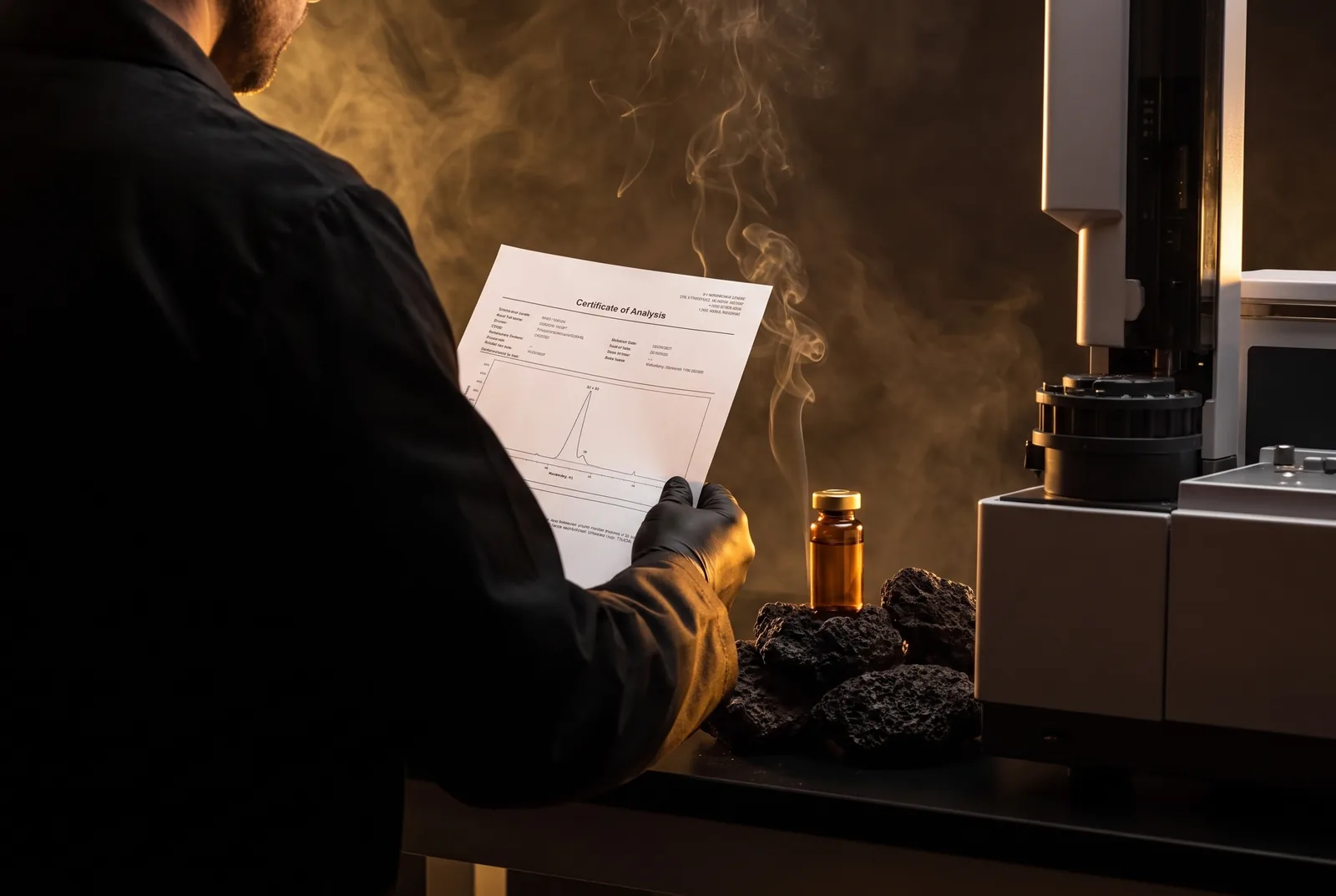
Start with the full name, not just the word thymosin. Ask for the sequence. For thymosin alpha-1, that means 28 residues with the acetyl cap on the first one.
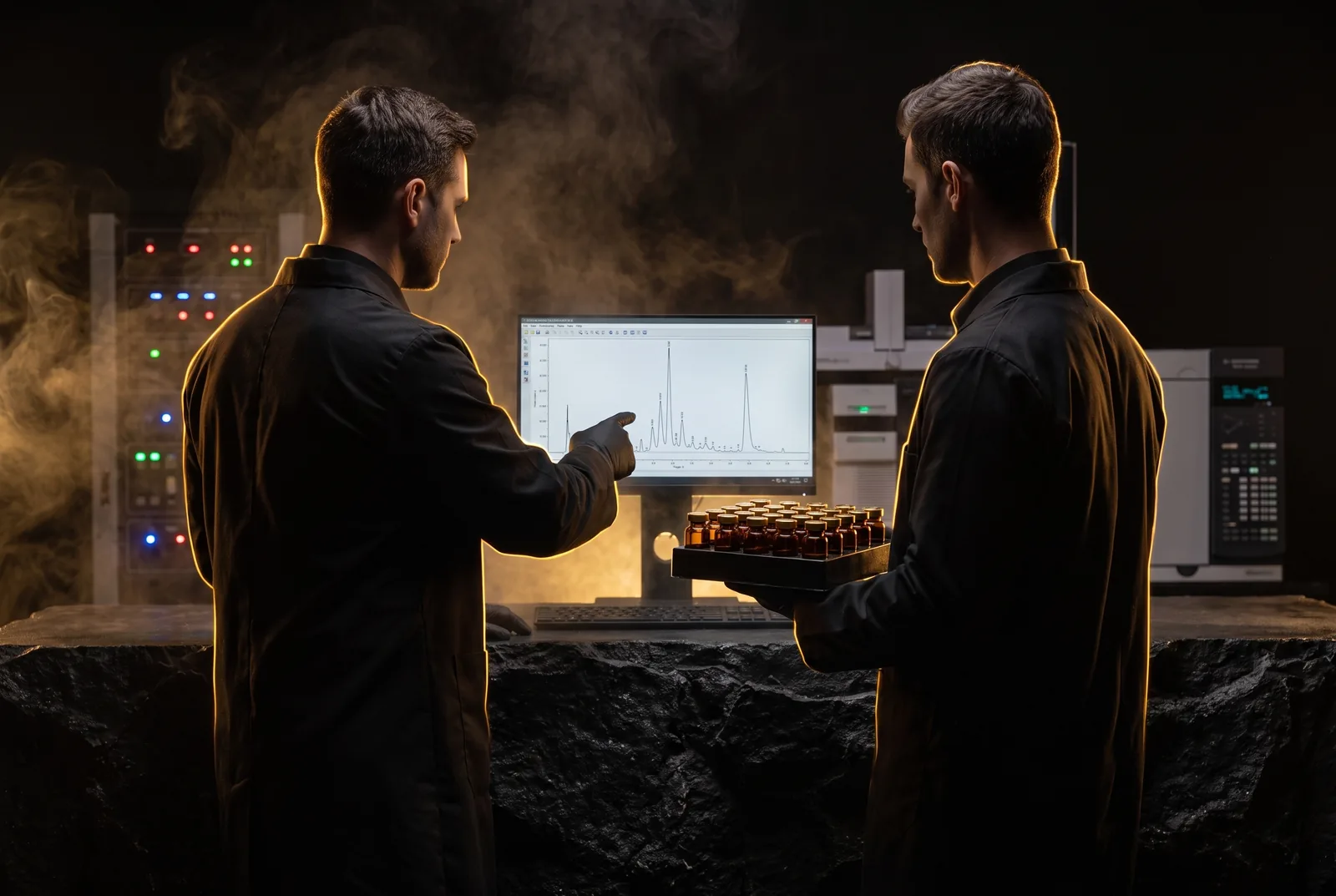
Then look for a measured mass. In the 2013 paper, the capped chain came in at 3108.79 daltons and the plain chain would be 42 daltons lighter [3]. A report that lists a mass far from the stated sequence needs an explanation.
Mass spectrometry paired with HPLC is the tool that told cut and modified forms apart in the tissue study [7]. Look for the identity result as its own line, apart from the purity number.
For beta-4, ask whether the vial holds the whole chain or a piece, and which piece. Our certificate of analysis page shows what a report looks like, and the supplier checklist covers the rest. Unfamiliar terms are in the glossary.
- Full name and sequence, not only "thymosin"
- Acetyl cap noted for alpha-1
- A measured mass that fits the sequence
- The HPLC purity method and the lab's name
- Which form of beta-4: whole chain or a piece
Questions
Common questions
Are thymosin alpha-1 and TB-500 the same?
No. They belong to different families, the alpha and beta thymosins. The sequence on a certificate tells them apart.
How long is thymosin alpha-1?
It has 28 amino acids and an acetyl cap on the first one.
How can a report tell the capped chain from a plain one?
By mass. In one paper the acetyl cap added 42 daltons, and the capped chain measured 3108.79 daltons.
Is TB-500 the same as thymosin beta-4?
You cannot tell from the name. The papers cited here do not define TB-500, so ask for the sequence.